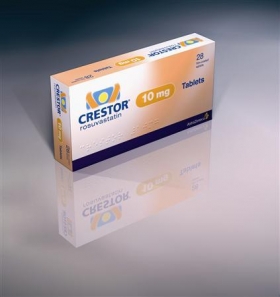
LONDON (Reuters) - A study showing Crestor reduces the risk of death and heart problems in some patients with low or normal cholesterol will be key to the future sales of the medicine, its maker AstraZeneca Plc <AZN.L> said on Tuesday.
By Ben Hirschler
LONDON (Reuters) - A study showing Crestor reduces the risk of death and heart problems in some patients with low or normal cholesterol will be key to the future sales of the medicine, its maker AstraZeneca Plc <AZN.L> said on Tuesday.
"It's very important," the Anglo-Swedish group's Chief Executive David Brennan told Reuters.
"It is consistent with the message that we have continued to deliver, which is that Crestor is a best-in-class product in this segment of the market."
!ADVERTISEMENT!Shares in AstraZeneca have jumped more than 8 percent in the last two days, following the surprise news that a clinical trial of Crestor in patients with low cholesterol but raised levels of C-reactive protein (CRP) had ended early because of the unequivocal benefits of treatment.
CRP, an inflammatory biomarker, is known to be associated with risk of heart attack.
The positive result opens up a potential new market for Crestor, since Brennan said some 25 million people in the United States alone were estimated to have raised CRP levels.
"It is not something that traditionally has been treated, so I do believe it is something that will have to develop over time," he added in a telephone interview.
Industry analysts calculate the new use could add billions of dollars in annual sales to AstraZeneca's third biggest product, which last year generated global revenues of $2.8 billion. JP Morgan sees sales of $9 billion by 2016.
Crestor is a crucial product for AstraZeneca since sales of its top seller, ulcer pill Nexium, are slowing and both Nexium and its second-biggest drug Seroquel, for treating schizophrenia, face the threat of generic competition.
PRESSURE TO PUBLISH
Brennan said AstraZeneca planned to publish full results from the so-called Jupiter study "as soon as possible" but it was too early to say when this would be, since independent monitors of the trial only recommended a halt on March 29.
Crestor also stands to gain from criticism at a top U.S. medical meeting of Vytorin, a rival cholesterol fighter from Merck & Co <MRK.N> and Schering-Plough <SGP.N>. Both Crestor and Vytorin are used to treat difficult cases of raised cholesterol.
Vytorin combines Merck's older drug Zocor -- which belongs to the same statin drug class as Crestor -- with Zetia, a newer type of treatment that blocks cholesterol absorption in the intestines.
"There is clearly a move back towards using statins alone first, and Crestor will definitely benefit from that," Brennan said.
"Crestor is a single product whereas Vytorin is a combination and, as is always the case with combinations, you're dealing with two separate products that have two separate risk-benefit profiles.
"The question about the benefit (of Vytorin) has been called and there is going to have to be work done to finalize it."
Some industry analysts have criticized AstraZeneca for not doing more to promote Crestor but Brennan denied the charge and said Crestor was marketed as hard as rival products amongst the target audience of cardiologists and specialist doctors.
The company is also in the process of rolling out its first big direct-to-consumer advertising campaign for Crestor in the United States since 2006, he added.