
As NASA's Dawn spacecraft closes in on Ceres, new images show the dwarf planet at 27 pixels across, about three times better than the calibration images taken in early December. These are the first in a series of images that will be taken for navigation purposes during the approach to Ceres.
Over the next several weeks, Dawn will deliver increasingly better and better images of the dwarf planet, leading up to the spacecraft's capture into orbit around Ceres on March 6. The images will continue to improve as the spacecraft spirals closer to the surface during its 16-month study of the dwarf planet.
>> Read the Full Article

Cold snaps like the ones that hit the eastern United States in the past winters are not a consequence of climate change. Scientists at ETH Zurich and the California Institute of Technology have shown that global warming actually tends to reduce temperature variability.
Repeated cold snaps led to temperatures far below freezing across the eastern United States in the past two winters. Parts of the Niagara Falls froze, and ice floes formed on Lake Michigan. Such low temperatures had become rare in recent years. Pictures of icy, snow-covered cities made their way around the world, raising the question of whether climate change could be responsible for these extreme events
>> Read the Full Article

Love scrumptious vegan pizza? You’d better enjoy it while you can, because climate change is moving in to hog a slice. According to an Australian report, Appetite for Change, climate change isn’t just going to decimate existing crops — it’s also going to change the way the survivors taste. And not in a good way. The researchers say that we’re going to be eating increasingly bland, tasteless, mushy food because of the way shifting temperatures are affecting farming, and in fact, it’s already started happening.
>> Read the Full Article
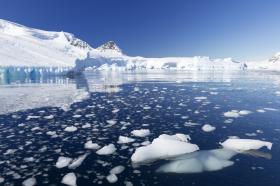
New research published this week in the journal Science Express describes how the ice shelves around Antarctica are thinning and therefore allowing more of the ice sheet behind them to flow into the sea.
Using nearly two decades of satellite data, the team of international researchers observed an acceleration of ice loss from the continent’s ice shelves, with an increase in loss of 70% in West Antarctica over the last decade. In the Amundsen and Bellingshausen regions, some ice shelves have lost up to 18% of their thickness in less than two decades.
>> Read the Full Article

The health benefits of the Mediterranean diet are well-known. As well as being healthier, a recent article concludes that the menu traditionally eaten in Spain leaves less of a carbon footprint than that of the US or the United Kingdom. The consequences of climate change range from species extinction to sea-level increases and the spread of diseases. For this reason, researchers have been struggling for years to alleviate its effects, even limiting the pollution caused by food consumption.
>> Read the Full Article
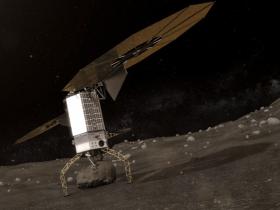
NASA has decided to pluck a small boulder off an asteroid and bring it back to the vicinity of Earth, rather than bag up an entire asteroid, agency officials in charge of the Asteroid Redirect Mission (ARM) announced today.
The $1.25 billion mission, which is planned to launch in December 2020, would send a robotic spacecraft for a rendezvous with an asteroid in 2022. After touching down on the asteroid’s surface, the spacecraft would snatch a boulder several meters across. The spacecraft would then orbit the asteroid for up to 400 days, testing out an idea for defending Earth from a catastrophic asteroid impact: using the spacecraft’s own gravitational field to subtly alter the asteroid’s orbit. Next, the spacecraft would bring the snatched rock back to Earth’s vicinity in 2025. Finally, as part of preparations for a possible mission to Mars, astronauts would visit and examine the rock for some 25 days, using the planned Orion spacecraft to make the trip.
>> Read the Full Article
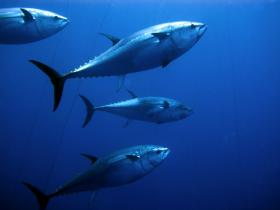
Deep-water marine fish living on the continental slopes at depths from 2,000 feet to one mile have liver pathologies, tumors and other health problems that may be linked to human-caused pollution, one of the first studies of its type has found. The research, conducted in the Bay of Biscay west of France, also discovered the first case of a deep water fish species with an “intersex” condition, a blend of male and female sex organs. The sampling was done in an area with no apparent point-source pollution, and appears to reflect general ocean conditions.
>> Read the Full Article

Did Mars ever support life? This question has intrigued us for centuries! We have had spacecraft on Mars for quite a while poking and analyzing soil and rocks and taking photos. Now NASA has new data which help answer these questions.
A team using the Sample Analysis at Mars (SAM) instrument suite aboard NASA's Curiosity rover has made the first detection of nitrogen on the surface of Mars from release during heating of Martian sediments.
The nitrogen was detected in the form of nitric oxide, and could be released from the breakdown of nitrates during heating. Nitrates are a class of molecules that contain nitrogen in a form that can be used by living organisms. The discovery adds to the evidence that ancient Mars was habitable for life.
>> Read the Full Article

Zinc is an important part of the human diet. You get it in Cashews, spinach, beef, shrimp, flax seed, Oysters, garlic, lima beans peanuts, turkey, Salmon, Pork, Brown rice and other foods. These are not listed in any particular order.
Zinc, is an important mineral in human health, that appears to affect how the immune system responds to stimulation, especially inflammation, new research from Oregon State University shows.
Zinc deficiency could play a role in chronic diseases such as cardiovascular disease, cancer and diabetes that involve inflammation. Such diseases often show up in older adults, who are more at risk for zinc deficiency.
“When you take away zinc, the cells that control inflammation appear to activate and respond differently; this causes the cells to promote more inflammation,” said Emily Ho, a professor and director of the Moore Family Center for Whole Grain Foods, Nutrition and Preventive Health in the OSU College of Public Health and Human Sciences, and lead author of the study.
>> Read the Full Article