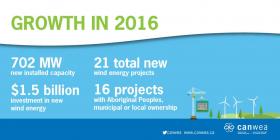
OTTAWA – Canada’s wind energy industry had another year of strong growth in 2016, adding 702 MW of new capacity through the commissioning of 21 projects in Ontario, Quebec and Nova Scotia. Sixteen of these projects are owned, at least in part, by aboriginal or local communities, or municipal governments. Canada now has 11,898 MW of installed wind generation capacity, enough to supply six percent of Canada’s electricity demand and meet the annual electricity needs of more than three million homes.
>> Read the Full Article
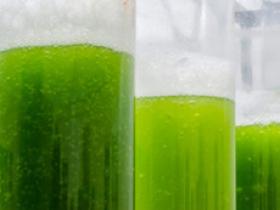
Scientists have long known of the potential of microalgae to aid in the production of biofuels and other valuable chemicals. However, the difficulty and significant cost of growing microalgae have in some ways stalled further development of this promising technology. Bendy Estime, a biomedical and chemical engineering Ph.D. candidate, has devoted his research to this area, and developed a new technology for energy efficient cultivation and harvesting of microalgae.
Estime’s research has been published as a peer-reviewed article in Scientific Reports on Jan. 19. He and his research advisors, Distinguished Professor Radhakrishna Sureshkumar, chair of the Department of Biomedical and Chemical Engineering, and Professor Dacheng Ren, have secured a provisional patent for the technology.
>> Read the Full Article
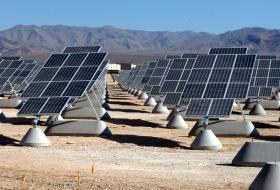
Homes with solar panels do not require on-site storage to reap the biggest economic and environmental benefits of solar energy, according to research from the Cockrell School of Engineering at The University of Texas at Austin. In fact, storing solar energy for nighttime use actually increases both energy consumption and emissions compared with sending excess solar energy directly to the utility grid.
In a paper published in Nature Energy on Jan. 30, researchers assessed the trade-offs of adding home energy storage to households with existing solar panels, shedding light on the benefits and drawbacks of adding storage considering today’s full energy grid mix.
>> Read the Full Article
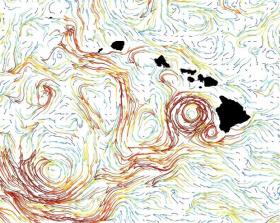
Oceanographers commonly calculate large scale surface ocean circulation from satellite sea level information using a concept called “geostrophy,” which describes the relationship between oceanic surface flows and sea level gradient. Conversely, researchers rely on data from in-water current meters to measure smaller scale motion. New research led by University of HawaiÊ»i at MÄnoa oceanographer Bo Qiu has determined from observational data the length scale at which using sea level height no longer offers a reliable calculation of circulation.
>> Read the Full Article
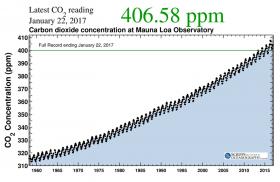
Last year will go down in history as the year when the planet’s atmosphere broke a startling record: 400 parts per million of carbon dioxide. The last time the planet’s air was so rich in CO2 was millions of years ago, back before early predecessors to humans were likely wielding stone tools; the world was a few degrees hotter back then, and melted ice put sea levels tens of meters higher.
“We’re in a new era,” says Ralph Keeling, director of the Scripps Institution of Oceanography’s CO2 Program in San Diego. “And it’s going fast. We’re going to touch up against 410 pretty soon.”
>> Read the Full Article