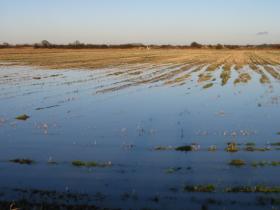
What with rising rainfall in the west, and hotter, drier summers in the east, British farmers place plenty of challenges from global warming, writes Anna Bowen. But there are also positive opportunities for agricultural innovators to adapt their farming systems to changing conditions, make their operations more resilient and sustainable, and make themselves part of the solution.
>> Read the Full Article
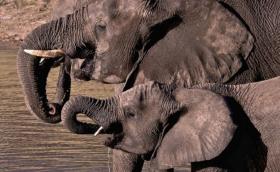
In an announcement that could prove to be extremely good news for elephants in the wild, the Chinese government has promised to end its domestic ivory market by the end of this year.
Every year, thousands of elephants are killed for their tusks by poachers. Between 2011 and 2014, more than 100,000 elephants were slaughtered. The African elephant population dropped 30 percent from 2007 to 2014. More elephants are being killed than are being born.
>> Read the Full Article
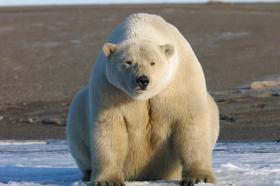
From the Arctic to the Mojave Desert, terrestrial and marine habitats are rapidly changing. These changes impact animals that are adapted to specific ecological niches, sometimes displacing them or reducing their numbers. From their privileged vantage point, satellites are particularly well-suited to observe habitat transformation and help scientists forecast impacts on the distribution, abundance and migration of animals.
>> Read the Full Article
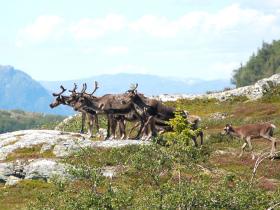
Reindeer may be best known for pulling Santa’s sleigh, but a new study suggests they may have a part to play in slowing down climate change too.
A team of researchers, writing in the journal Environmental Research Letters, found that when reindeer reduce the height and abundance of shrubs on the Arctic tundra through grazing, the level of surface albedo – the amount of solar energy (shortwave radiation) reflected by the Earth back into space – is increased.
>> Read the Full Article
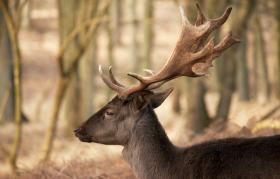
The team looked at the antler structure at the 'nano-level', which is incredibly small, almost one thousandth of the thickness of a hair strand, and were able to identify the mechanisms at work, using state-of-the-art computer modelling and x-ray techniques.
First author Paolino De Falco from QMUL's School of Engineering and Materials Science said: "The fibrils that make up the antler are staggered rather than in line with each other. This allows them to absorb the energy from the impact of a clash during a fight."
>> Read the Full Article