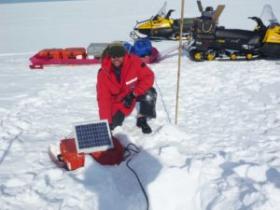
Over the past few years, a large fracture has grown across a large floating ice shelf on the Antarctic Peninsula. The world is watching the ice shelf, now poised to break off an iceberg the size of Delaware into the ocean.
It’s not a new phenomenon; this “thumb” of Antarctica, which juts out into the stormy Southern Ocean, has lost more than 28,000 square kilometers of floating ice — almost as large as Massachusetts — over the past half-century. This has included the complete disintegration of four ice shelves, the floating extensions of glaciers.
>> Read the Full Article
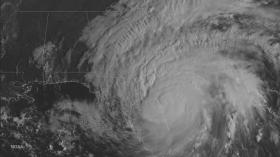
During periods of greater Atlantic hurricane activity, a protective barrier of vertical wind shear and cooler ocean temperatures forms along the U.S. East Coast, weakening storms as they approach land, according to a new study by NCEI scientist, Jim Kossin. In his paper, “Hurricane Intensification along United States Coast Suppressed during Active Hurricane Periods (link is external),” published in Nature, Kossin identifies this “buffer zone” and describes its relationship with both active and inactive periods of Atlantic hurricane activity.
>> Read the Full Article
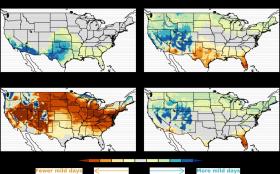
As scientists work to predict how climate change may affect hurricanes, droughts, floods, blizzards and other severe weather, there's one area that's been overlooked: mild weather. But no more.
NOAA and Princeton University scientists have produced the first global analysis of how climate change may affect the frequency and location of mild weather - days that are perfect for an outdoor wedding, baseball, fishing, boating, hiking or a picnic. Scientists defined "mild" weather as temperatures between 64 and 86 degrees F, with less than a half inch of rain and dew points below 68 degrees F, indicative of low humidity.
>> Read the Full Article
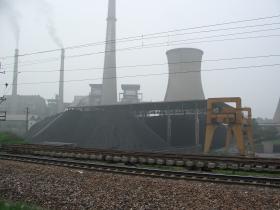
China has canceled plans for more than 100 new coal-fired power plants, including several that were already under construction, according to news reports. The power stations, with an estimated price tag of $62 billion, would have had an electricity-generating capacity of more than 100 gigawatts, spread across several provinces.
>> Read the Full Article

At four in the morning, Tim Caro roused his colleagues. Bleary-eyed and grumbling, they followed him to the edge of the village, where the beasts were hiding. He sat them down in chairs, and after letting their eyes adjust for a minute, he asked them if they saw anything. And if so, would they please point where?
>> Read the Full Article