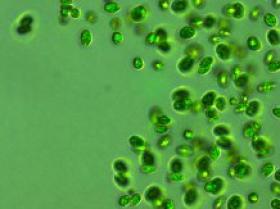
Important microscopic creatures which produce half of the oxygen in the atmosphere can rapidly adapt to global warming, new research suggests.
Phytoplankton, which also act as an essential food supply for fish, can increase the rate at which they take in carbon dioxide and release oxygen while in warmer water temperatures, a long-running experiment shows.
Monitoring of one species, a green algae, Chlamydomonas reinhardtii, after ten years of them being in waters of a higher temperature shows they quickly adapt so they are still able to photosynthesise more than they respire.
>> Read the Full Article
No one keeps time quite like NASA.
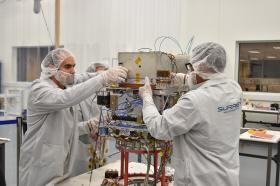
Last month, the space agency's next-generation atomic clock was joined to the spacecraft that will take it into orbit in late 2017.
That instrument, the Deep Space Atomic Clock was developed by NASA's Jet Propulsion Laboratory in Pasadena, California. On Feb. 17, JPL engineers monitored integration of the clock on to the Surrey Orbital Test Bed spacecraft at Surrey Satellite Technology in Englewood, Colorado.
>> Read the Full Article
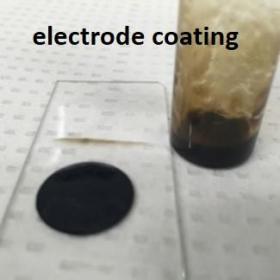
Yale scientists have developed an ultra-thin coating material that has the potential to extend the life and improve the efficiency of lithium-sulfur batteries, one of the most promising areas of energy research today.
In a study published online March 20 in the Proceedings of the National Academy of Sciences, researchers describe the new material — a dendrimer-graphene oxide composite film — which can be applied to any sulfur cathode. A cathode is the positive terminal on a battery.
>> Read the Full Article
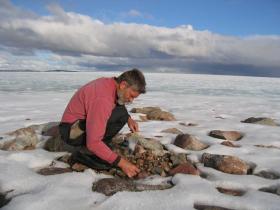
Flying over the remote during research at the Barnes Ice Cap on Baffin Island in 2009, a Boulder scientist saw dark where there should have been white.
Closer inspection revealed that what Gifford Miller spotted was the remnants of a 1963 geological camp that had been buried for decades by snow and ice. Long-abandoned tents and snowmobiles were being unveiled by melting of the ice cap, and that helped inspire a study that suggests a disturbing climate change signal.
>> Read the Full Article
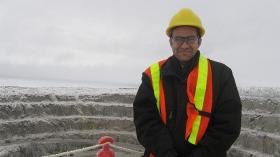
International research team warns of mineral supply constraints as demand increases for green technologies
An international team of researchers, led by the University of Delaware’s Saleem Ali, says global resource governance and sharing of geoscience data is needed to address challenges facing future mineral supply.
Specifically of concern are a range of technology minerals, which are an essential ingredient in everything from laptops and cell phones to hybrid or electric cars to solar panels and copper wiring for homes. However, base metals like copper are also a matter of immense concern.
>> Read the Full Article