Top Stories

Carbon satellite to serve as an important tool for politicians and climate change experts

A new satellite that measures and provides detailed carbon balance information is one of the most important new tools in carbon measurement since infrared light, believe researchers from the University of Copenhagen. The researchers expect the satellite to be a valuable tool for the UN’s work on climate change related to the Paris climate accord.

>> Read the Full Article

NOAA adopts technology to automate weather balloon launches

NOAA’s National Weather Service is tapping technology to automate weather balloon launches in Alaska, a move that will allow staff to improve public service across the state while saving federal tax dollars.

>> Read the Full Article

Survival and restoration of China’s native forests imperiled by proliferating tree plantations

China has implemented some of the world’s most ambitious policies to protect and restore forests, yet these programs still miss the mark, according to a team of researchers led by Princeton University.

>> Read the Full Article

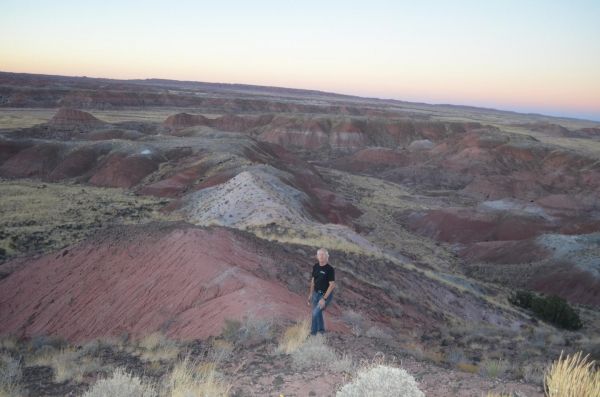
In Ancient Rocks, Scientists See a Climate Cycle Working Across Deep Time

Scientists drilling deep into ancient rocks in the Arizona desert say they have documented a gradual shift in Earth’s orbit that repeats regularly every 405,000 years, playing a role in natural climate swings. Astrophysicists have long hypothesized that the cycle exists based on calculations of celestial mechanics, but the authors of the new research have found the first verifiable physical evidence. They showed that the cycle has been stable for hundreds of millions of years, from before the rise of dinosaurs, and is still active today. The research may have implications not only for climate studies, but our understanding of the evolution of life on Earth, and the evolution of the Solar System. It appears this week in the Proceedings of the National Academy of Sciences.

>> Read the Full Article
FSU Research: New Model Could Help Rebuild Eroding Lands in Coastal Louisiana

As coastal lands in Louisiana erode, researchers, environmentalists and engineers are all searching for ways to preserve the marsh coastline.

>> Read the Full Article

Genetics Help Make a Weed a Weed

New University of British Columbia research finds that the success of weedy and invasive plants like the Jerusalem artichoke lies in their genes.

>> Read the Full Article

Vulnerable Communities May be Adversely Affected by Transition to Cleaner Energy

Researchers at Indiana University have developed a new method for identifying communities that may be negatively affected by clean energy policies designed to hasten the move from fossil fuels to more environmentally friendly solutions.

>> Read the Full Article

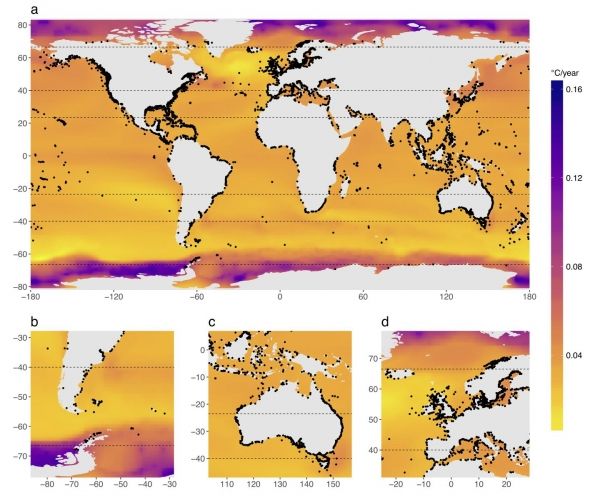
New Study Finds Climate Change Threatens Marine Protected Areas

New research from the University of North Carolina at Chapel Hill and collaborators found that most marine life in marine protected areas will not be able to tolerate warming ocean temperatures caused by greenhouse gas emissions. Marine protected areas have been established as a haven to protect threatened marine life, like polar bears, penguins and coral reefs, from the effects of fishing and other activities like mineral and oil extraction. The study found that with continued “business-as-usual” emissions, the protections currently in place won’t matter, because by 2100, warming and reduced oxygen concentration will make marine protected areas uninhabitable by most species currently residing in those areas.

>> Read the Full Article
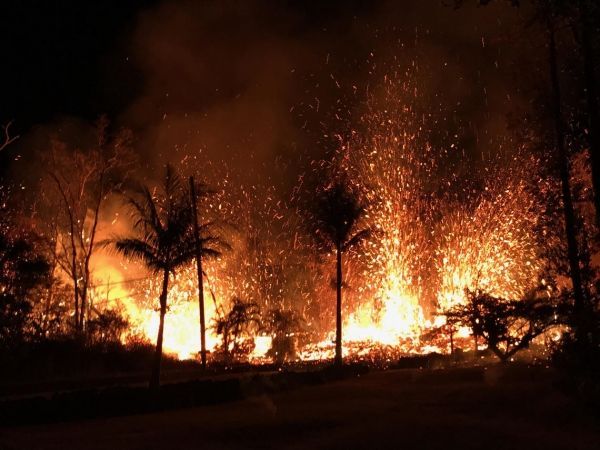
Kilauea Volcano Erupts

The intermittent eruption of lava in the Leilani Estates subdivision in the lower East Rift Zone of Kīlauea Volcano continues. Fissure 7 stopped erupting in mid-afternoon. A new fissure erupted near fissures 2 and 7, and lava fountains reached as high as about 70 m (230 ft). New ground cracks were reported on Highway 130, but no heat or escaping steam was subsequently observed.

>> Read the Full Article

University of Alberta gets funding to build cube satellite to help fight wildfires

The University of Alberta will lead a project to design, build and launch Ex-Alta 2, a new cube satellite to help combat forest fires, thanks to funding of $250,000 from the Canadian Space Agency.

>> Read the Full Article