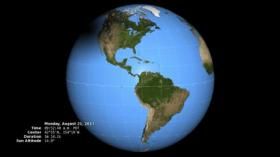
It was midafternoon, but it was dark in an area in Boulder, Colorado on Aug. 3, 1998. A thick cloud appeared overhead and dimmed the land below for more than 30 minutes. Well-calibrated radiometers showed that there were very low levels of light reaching the ground, sufficiently low that researchers decided to simulate this interesting event with computer models. Now in 2017, inspired by the event in Boulder, NASA scientists will explore the moon’s eclipse of the sun to learn more about Earth’s energy system.
On Aug. 21, 2017, scientists are looking to this year’s total solar eclipse passing across America to improve our modelling capabilities of Earth’s energy. Guoyong Wen, a NASA scientist working for Morgan State University in Baltimore, is leading a team to gather data from the ground and satellites before, during and after the eclipse so they can simulate this year’s eclipse using an advanced computer model, called a 3-D radiative transfer model. If successful, Wen and his team will help develop new calculations that improve our estimates of the amount of solar energy reaching the ground, and our understanding of one of the key players in regulating Earth’s energy system, clouds.
>> Read the Full Article
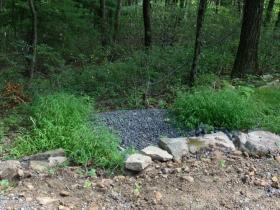
Vast swaths of Pennsylvania forests were clear-cut circa 1900 and regrowth has largely been from local native plant communities, but a team of researchers in Penn State's College of Agricultural Sciences has found that invasive, non-native plants are making significant inroads with unconventional natural gas development.
The spread of invasive non-native plants could have long-term negative consequences for the forest ecosystem in a region where the ubiquitous woods provide timbering revenue, wildlife habitat and ecotourism, warns team member David Mortensen, professor of weed and applied plant ecology.
>> Read the Full Article
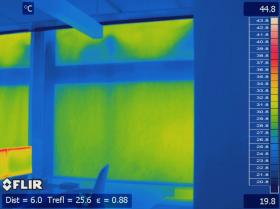
By using advanced lighting and automated shades, scientists from the Department of Energy’s Lawrence Berkeley National Laboratory (Berkeley Lab) found that occupants on one floor of a high-rise office building in New York City were able to reduce lighting energy usage by nearly 80 percent in some areas.
The dramatic results emerged at a “living laboratory” set up to test four sets of technologies on one 40,000 square-foot floor of a building.
>> Read the Full Article
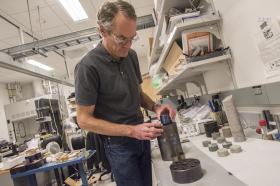
The Department of Energy’s Lawrence Berkeley National Laboratory (Berkeley Lab) will lead a new $9 million project aimed at removing technical barriers to commercialization of enhanced geothermal systems (EGS), a clean energy technology with the potential to power 100 million American homes.
Berkeley Lab will partner with seven other DOE national labs and six universities to develop field experiments focused on understanding and modeling rock fractures, an essential element of geothermal systems. Scientists will use the Sanford Underground Research Facility (SURF) in South Dakota to create small-scale fracture networks in crystalline rock 1,500 meters below ground.
>> Read the Full Article

With growing risks to the nation’s electrical grid from natural disasters and as a potential target for malicious attacks, the U.S. Department of Energy (DOE) and the U.S. Department of Homeland Security (DHS) should work closely with utility operators and other stakeholders to improve cyber and physical security and resilience, says a new congressionally mandated report by the National Academies of Sciences, Engineering, and Medicine.
The grid remains vulnerable to diverse threats that can potentially cause extensive damage and result in large-area, prolonged outages that could cost billions of dollars and cause loss of life, the report found. The committee that conducted the study and wrote the report recommended ways to make the grid more resilient through the development and demonstration of technologies and organizational strategies that minimize the likelihood that outages will happen, reduce the impacts and speed recovery if they do, all the while developing mechanisms for continual improvements based on changing threats.
>> Read the Full Article
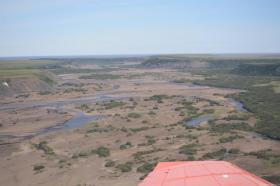
The thawing permafrost soils in the Arctic regions might contribute to the greenhouse effect in two ways: On the one hand rising temperatures lead to higher microbial methane production close to the surface. On the other hand deeper thawing opens new pathways for old, geologic methane. This is shown in a study in the Mackenzie Delta (Canada), conducted by scientists from the German Research Centre for Geosciences GFZ, the Alfred Wegener Institute, Helmholtz Centre for Polar and Marine Research (AWI) and partners in the US. The study is published in the journal Nature Scientific Reports.
>> Read the Full Article