
Financial markets notwithstanding, most of us were happy to see gas prices fall. It has certainly helped to put a little extra breathing room in our household budgets, even though we suspect it could lead to increased use of fossil fuels. On the other hand, it could open the door for some new initiatives to help control emissions, such as a carbon tax, or a fee and rebate plan that would tax the production of fossil fuels and give the proceeds out to all Americans.
Perhaps this would be a good time to take a closer look at what that gallon of gasoline actually costs us, when all the impacts are considered.
>> Read the Full Article
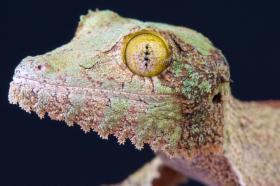
In a world first, a research team including James Cook University scientists has discovered how geckos manage to stay clean, even in dusty deserts.
The process, described in Interface, the prestigious journal of the Royal Society, may also turn out to have important human applications.
JCU's Professor Lin Schwarzkopf said the group found that tiny droplets of water on geckos, for instance from condensing dew, come into contact with hundreds of thousands of extremely small hair-like spines that cover the animals' bodies.
>> Read the Full Article
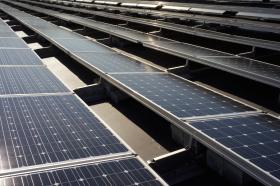
Global emissions of carbon dioxide from the energy sector stalled in 2014, marking the first time in 40 years in which there was a halt or reduction in emissions of the greenhouse gas that was not tied to an economic downturn, according to new data from the International Energy Agency (IEA).
"This gives me even more hope that humankind will be able to work together to combat climate change, the most important threat facing us today," said IEA Chief Economist Fatih Birol, recently named to take over from Maria van der Hoeven as the next IEA Executive Director.
>> Read the Full Article
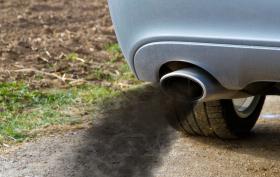
Estoril, Portugal: Researchers in the UK have, for the first time, shown how exhaust pollution from diesel engines is able to affect nerves within the lung. Air pollution is a significant threat to health, they say, and identifying potential mechanisms linking exposure to diesel exhaust and the exacerbation of respiratory diseases may lead to treatments for those affected.
Mr. Ryan Robinson, a PhD student at the National Heart and Lung Institute, Imperial College London, UK, will tell the 13th European Respiratory Society Lung Science Conference today (Saturday) about his work studying diesel exhaust particles and airway sensory nerves. The news comes as the Healthy Lungs for Life campaign, launched by the European Respiratory Society and European Lung Foundation, takes places this year aiming to raise awareness of the importance of breathing clean air.
>> Read the Full Article
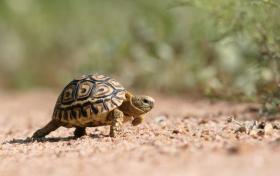
Wonderful news! Ten baby tortoises have been spotted on the Galapagos island of Pinzón, in Ecuador. This might not seem like such a big deal–after all, aren’t the Galapagos famous for their tortoises? But in this case, it’s been more than 100 years since the last baby tortoise was seen on Pinzón. Sadly, it was human activity that brought these cute animals to the brink of extinction. Sailors first arrived on Pinzón Island in the mid-18th century, bringing with them on their boats numerous rats that quickly gained a foothold in the fragile ecosystem, feasting on the eggs and hatchlings of the island’s tortoises who, up until then, had few natural predators.
>> Read the Full Article
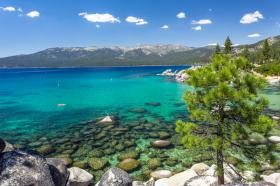
A recently published study on how natural and man-made sources of nitrogen are recycled through the Lake Tahoe ecosystem provides new information on how global change may affect the iconic blue lake.
“High-elevation lakes, such as Lake Tahoe, are sentinels of climate change,” said Lihini Aluwihare, associate professor of geosciences at Scripps Institution of Oceanography (SIO) at UC San Diego and co-author of the study. “Small changes in the lake's chemistry can have big impacts on the entire ecosystem.”
Lake Tahoe's nitrogen concentration is one of several factors that helps maintain its crystal clear waters. To keep Tahoe blue in the future, the researchers say it's important to keep a close eye on the nitrogen balance in the ecosystem over time.
>> Read the Full Article
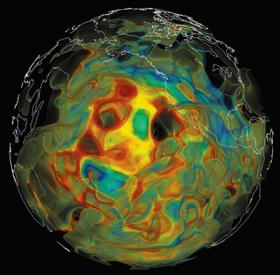
When a 7.9-magnitude earthquake struck central China's Sichuan province in 2008, seismic waves rippled through the region, toppling apartment houses in the city of Chengdu and swaying office buildings 1,000 miles away in Shanghai.
Though destructive, earthquakes provide benefit in one respect: they help researchers learn about the structure of the Earth, which in turn could lead to more accurate predictions of damage from future quakes and volcanic activity. By eavesdropping on the seismic vibrations of quakes as they rumble through the Earth, researchers can detect the existence of structures such as mineral deposits, subterranean lakes, and upwellings of magma. Thanks to a growing earthquake detection network and superfast computers, geoscientists are now able to explore the Earth's interior, a region that has been more inaccessible than the deepest ocean or the farthest planet in our solar system.
>> Read the Full Article
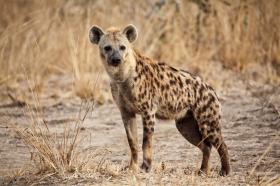
High social status has its privileges when it comes to aging – even in wild animals.
In a first-of-its-kind study involving a wild species, Michigan State University researchers have shown that social and ecological factors affect animal health. The results, published in the current issue of Biology Letters, focused on spotted hyenas in Kenya.
“High-ranking members in hyena clans reproduce more, they live longer and appear to be in better overall health,” said Nora Lewin, MSU doctoral student of zoology and co-lead author. “If you want to see the hierarchy of spotted hyenas, throw down some fresh meat near them. It’s quickly apparent who’s dominant and who’s not.”
But Lewin wondered if long-accepted biological markers would support what she was seeing in the field. Thanks to working with fellow lead author Kay Holekamp, MSU zoologist, and her long-running hyena experiment, Lewin had access to more than 25 years of data and was able to spend a summer afield in Kenya, observing hyenas’ social structure firsthand.
>> Read the Full Article



