A new Duke University-led study finds that most climate models likely underestimate the degree of decade-to-decade variability occurring in mean surface temperatures as Earth’s atmosphere warms. The models also provide inconsistent explanations of why this variability occurs in the first place. These discrepancies may undermine the models’ reliability for projecting the short-term pace as well as the extent of future warming, the study’s authors warn. As such, we shouldn’t over-interpret recent temperature trends.
>> Read the Full Article

There has been a significant increase in the amount of water "pouring" out of comet 67P/Churyumov-Gerasimenko, the comet on which the Rosetta mission's Philae lander touched down in November 2014.
The 2.5-mile-wide (4-kilometer) comet was releasing the earthly equivalent of 40 ounces (1.2 liters) of water into space every second at the end of August 2014. The observations were made by NASA's Microwave Instrument for Rosetta Orbiter (MIRO), aboard the European Space Agency's Rosetta spacecraft. Science results from the MIRO team were released today as part of a special Rosetta-related issue of the journal Science.
>> Read the Full Article
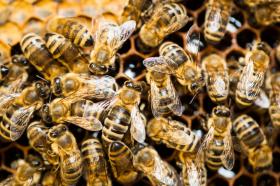
A new study shows that more than half the people in some developing countries could become newly at risk for malnutrition if crop-pollinating animals — like bees — continue to decline. Despite popular reports that pollinators are crucial for human nutritional health, no scientific studies have actually tested this claim — until now. The new research by scientists at the University of Vermont and Harvard University has, for the first time, connected what people actually eat in four developing countries to the pollination requirements of the crops that provide their food and nutrients.
>> Read the Full Article

The harvesting of wood to meet the heating and cooking demands for billions of people worldwide has less of an impact on global forest loss and carbon dioxide (CO2) emissions than previously believed, according to a new Yale-led study. Writing in the journal Nature Climate Change, a team of researchers, including Prof. Robert Bailis of the Yale School of Forestry & Environmental Studies (F&ES), concludes that only about 27 to 34 percent of wood fuel harvested worldwide would be considered “unsustainable.” According to the assessment, “sustainability” is based on whether or not annual harvesting exceeds incremental re-growth.
>> Read the Full Article

When it comes to electric vehicles, we hear plenty about electric cars being launched into the consumer market but not too much about commercial vehicles. Maybe that’s because not too many people have to concern themselves with what type of delivery or garbage truck they are going to buy next. Nevertheless, such considerations matter, since the electrification of commercial fleets promises considerably larger efficiency gains than cars.
Four-year-old California company Wrightspeed, started by Tesla co-founder Ian Wright, has developed a technology that zeros in on a specific niche of the commercial fleet market, bringing both fuel savings and emissions mitigation for commercial fleet operators.
>> Read the Full Article
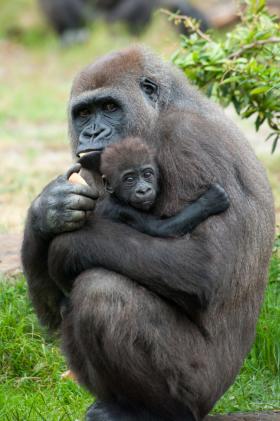
While the whole world is aware of the many human fatalities from the Ebola epidemic in Western Africa, you may not realize that the disease has claimed hundreds of thousands of other victims in the area. Unfortunately, Ebola is simultaneously working its way through gorilla and chimpanzee populations with no sign of stopping. In the past 25 years, Ebola has wiped out 33% of all apes, reports the Daily Beast.
Apes are already up against a number of obstacles that threaten their lives like poaching and habitat destruction. The last thing they need is to have a highly fatal disease reduce their numbers further. It’s even more devastating when you reflect on the fact that many of these primate species that are ravaged by Ebola were already officially listed as endangered.
>> Read the Full Article
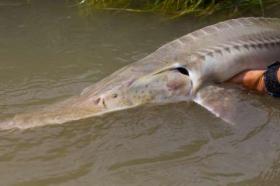
Pallid sturgeon come from a genetic line that has lived on this planet for tens of millions of years; yet it has been decades since anyone has documented any of the enormous fish successfully producing young that survive to adulthood in the upper Missouri River basin.
Now, fisheries scientists with the U.S. Geological Survey, Montana State University and the U.S. Fish and Wildlife Service have shown why, detailing for the first time the biological mechanism that has caused the long decline of pallid sturgeon in the Missouri River and led to its being placed on the endangered species list 25 years ago.
In a paper published this week in the journal Fisheries, the scientists show that oxygen-depleted dead zones between dams in the upper Missouri River are directly linked with the failure of endangered pallid sturgeon hatched embryos to survive to adulthood.
>> Read the Full Article
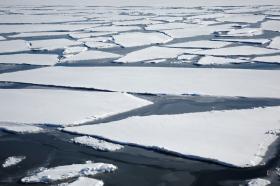
Satellite images have revealed that a remote Arctic ice cap has thinned by more than 50 metres since 2012 – about one sixth of its original thickness – and that it is now flowing 25 times faster. A team led by scientists from the Centre for Polar Observation and Modelling (CPOM) at the University of Leeds combined observations from eight satellite missions, including Sentinel-1A and CryoSat, with results from regional climate models, to unravel the story of ice decline.
>> Read the Full Article
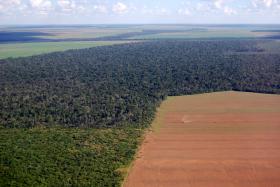
Today, fewer chicken nuggets can trace their roots to cleared Amazon rain forest.
In 2006, following a report from Greenpeace and under pressure from consumers, large companies like McDonald's and Wal-Mart decided to stop using soy grown on cleared forestland in the Brazilian Amazon. This put pressure on commodity traders, such as Cargill, who in turn agreed to no longer purchase soy from farmers who cleared rain forest to expand soy fields.
The private sector agreement, a type of supply chain governance, is called the Soy Moratorium and it was intended to address the deforestation caused by soy production in the Amazon.
>> Read the Full Article



