
A new study led by the Wildlife Conservation Society reveals that in India's human dominated agricultural landscapes, where leopards prowl at night, it's not livestock that’s primarily on the menu – it is man's best friend.
The study, which looked at scat samples for leopards in India's Ahmednagar’s district in Maharashtra, found that 87 percent of their diet was made up of domestic animals. Domestic dog dominated as the most common prey item at 39 percent and domestic cats were second at 15 percent.
>> Read the Full Article
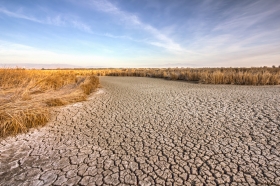
The entire state of California is in a drought. A big part of the state, including the fertile Central Valley, is experiencing the worst category of drought, exceptional. California supplies much of the fruits, vegetables and nuts the nation eats. In inland areas such as the Central Valley, as well as the combined Sacramento and San Joaquin valleys, agriculture truly rules.
>> Read the Full Article

We all know it's important to recycle and not toss things into the trash or the environment, but how carefully do we need to rinse containers before sending them on their way to the recycling center? Some argue that recycling is a total waste of water when you factor in the amount people are using to get their cans, bottles, and jars squeaky-clean, while others claim containers don't need to be rinsed at all, and some say that the reality lies in the middle ground.
>> Read the Full Article

One of the best ways to spark an energy revolution is through the younger generation – and nothing quite speaks their language like video games.
But this issue has less to do with the content of these addictive games and more with how the younger generation consumes them.
Fantasy and adventure, sci-fi and first-person shooters, strategy and racing – video games today comes in all types of genres with thousands of add-ons and customizable features to make each story a virtual reality. And with all of these choices comes two more: buy a copy of the video game on a disc or download the video game straight from the console?
>> Read the Full Article

A comprehensive new analysis released today says that nearly half (49%) of all recent tropical deforestation is the result of illegal clearing for commercial agriculture. The study also finds that the majority of this illegal destruction was driven by overseas demand for agricultural commodities including palm oil, beef, soy, and wood products. In addition to devastating impacts on forest-dependent people and biodiversity, the illegal conversion of tropical forests for commercial agriculture is estimated to produce 1.47 gigatonnes of carbon each year—equivalent to 25% of the EU's annual fossil fuel-based emissions.
>> Read the Full Article

A multinational organization that coordinates fishing activities in the western Pacific is throwing a lifeline to heavily overfished Pacific bluefin tuna stocks.
Speaking today at a press briefing, Japanese officials provided details on a plan agreed to last week that aims to rebuild the spawning population by halving the catch of juveniles and limiting takes of mature fish as well. The proposal calls for total Pacific bluefin catches to be kept below the 2002 to 2004 annual average levels and for catches of fish weighing fewer than 30 kilograms—juveniles too young to spawn—to be reduced to 50% of those levels.
>> Read the Full Article

Climate change has made us question the things that we do, from buying food and using energy to riding planes and driving cars. One of the top questions surrounding climate change is this: Which fuel type is more environmentally friendly, petrol or diesel? Common knowledge would make us reply "diesel" right away, as engines running on diesel emit less carbon dioxide or CO2, and less CO2 is better to decrease the amount of greenhouse gases in the atmosphere. However, being eco-friendly isn't as simple as emitting less CO2. Diesel-powered vehicles may emit 20% less CO2 per kilometre travelled, but they may be more harmful for local pollution due to the tiny particles that are released by diesel engines into the atmosphere. The question really isn't which fuel or engine type is more environmentally friendly, as no form of engine that uses fossil fuels will ever become good for the environment. Rather, we should look at which has the capacity to inflict the least amount of damage to the environment.
>> Read the Full Article

The freezers being tested in Central Park operate free of electricity — vendors can even charge their own mobile devices by plugging them into outlets attached to the freezer units.
It seems fitting that Unilever, the world's largest producer of ice cream, is rolling out the world's first solar freezers in Central Park to keep those Popsicles, Good Humor or Magnum-brand bars cold while at the same time putting no strain on the environment.
>> Read the Full Article

How is a warming climate impacting life in the oceans? Fish can move to cooler areas, but coral reefs are anchored in place.
Late-summer water temperatures near the Florida Keys were warmer by nearly 2 degrees Fahrenheit in the last several decades compared to a century earlier, according to a new study by the U.S. Geological Survey.
Researchers indicate that the warmer water temperatures are stressing corals and increasing the number of bleaching events, where corals become white resulting from a loss of their symbiotic algae. The corals can starve to death if the condition is prolonged.
>> Read the Full Article



