The loss of arctic permafrost deposits by coastal erosion could amplify climate warming via the greenhouse effect. A study using sediment samples from the Sea of Okhotsk on the eastern coast of Russia led by AWI researchers revealed that the loss of Arctic permafrost at the end of the last glacial period led to repeated sudden increases in the carbon dioxide concentration in the atmosphere.
Not all oil weighs equally on the scales of climate change.
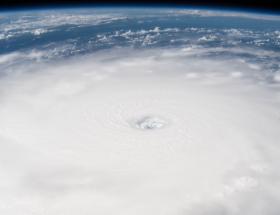
NASA’s Aqua satellite obtained a visible image of Hurricane Norman northeast of the Hawaiian Islands and found the storm weakening and battling wind shear.
Hurricane Olivia’s eye was clear in infrared imagery taken by NASA’s Aqua satellite from its orbit in space.
Tropical Storm Florence appeared weaker in infrared imagery from NASA’s Aqua satellite, with warmer cloud top temperatures. However, forecasters believe this is a temporary setback.
Tropical Depression Gordon just doesn’t want to give up. Gordon is meandering in the southern U.S. and satellites pinpointed its center over Arkansas on Friday, Sept. 7. Gordon continues to soak the southern U.S. and NASA’s Aqua satellite located the strongest storms associated with the depression.
Smiling does not necessarily indicate that we are happy, according to new research at Brighton and Sussex Medical School (BSMS).
The longstanding mystery of soot formation, which combustion scientists have been trying to explain for decades, appears to be finally solved, thanks to research led by Sandia National Laboratories.
The MRSA staphylococcus is an example of a pathogen, the likes of which are often called superbugs. These are resistant to most antibiotics and can cause serious infections.
Scientists from Waseda University, the National Defense Medical College, and the Japan Science and Technology Agency developed a new bioadhesive, wirelessly-powered light-emitting device which could better treat cancers in delicate organs.
Page 2072 of 2751
ENN Daily Newsletter
ENN Weekly Newsletter
