
Zilin Jiang from Technion — Israel Institute of Technology and Alexandr Polyanskii from the Moscow Institute of Physics and Technology (MIPT) have proved László Fejes Tóth’s zone conjecture. Formulated in 1973, it says that if a unit sphere is completely covered by several zones, their combined width is at least π. The proof, published in the journal Geometric and Functional Analysis, is important for discrete geometry and enables new problems to be formulated.
>> Read the Full Article

New research at the University of Waterloo could lead to the development of batteries that triple the range of electric vehicles.
The breakthrough involves the use of negative electrodes made of lithium metal, a material with the potential to dramatically increase battery storage capacity.
“This will mean cheap, safe, long-lasting batteries that give people much more range in their electric vehicles,” said Quanquan Pang, who led the research while he was a PhD candidate in chemistry at Waterloo.
The increased storage capacity, or energy density, could boost the distance electric vehicles are able to travel on a single charge, from about 200 kilometres to 600 kilometres.
>> Read the Full Article
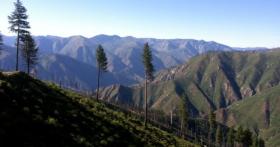
The forests you see today are not what you will see in the future. That’s the overarching finding from a new study on the resilience of Rocky Mountain forests, led by Colorado State University.
Researchers analyzed data from nearly 1,500 sites in five states — Colorado, Wyoming, Washington, Idaho, and Montana — and measured more than 63,000 seedlings after 52 wildfires that burned over the past three decades. They wanted to understand if and how changing climate over the last several decades affected post-fire tree regeneration, a key indicator of forest resilience.
>> Read the Full Article
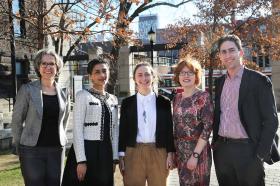
A team of researchers from the University of Toronto is partnering with the construction industry to help reduce the carbon footprint of buildings, bridges, public transit and other major infrastructure projects.
“What we’re building is a decision-support tool that can be used in the early stages of design and planning,” says Heather MacLean, a professor in the department of civil engineering who is one of five Faculty of Applied Science & Engineering professors involved in the project. “Ultimately, the goal is to produce infrastructure with much lower greenhouse gas impact.”
>> Read the Full Article
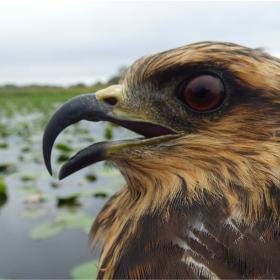
The federally endangered bird, the snail kite, was faced with an interesting dilemma: The island apple snail was good to eat, but about two to five times bigger than the native snail that the bird usually consumed. What’s a hungry bird to do? Evolve – quickly.
A study by a team of University of Florida researchers has found that in about 10 years, the snail kite has evolved to develop a larger beak as its new prey, the island apple snail, proliferated and became invasive. The study is published in Nature Ecology & Evolution.
>> Read the Full Article



