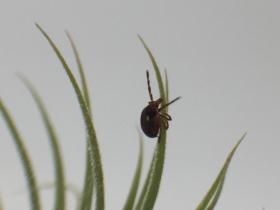
While rare, some people experience recurrent episodes of anaphylaxis—a life-threatening allergic reaction that causes symptoms such as the constriction of airways and a dangerous drop in blood pressure—for which the triggers are never identified. Recently, researchers at the National Institute of Allergy and Infectious Diseases (NIAID), part of the National Institutes of Health, found that some patients’ seemingly inexplicable anaphylaxis was actually caused by an uncommon allergy to a molecule found naturally in red meat. They note that the allergy, which is linked to a history of a specific type of tick bite, may be difficult for patients and health care teams to identify.
>> Read the Full Article

MIT researchers have developed a new system that could potentially be used for converting power plant emissions of carbon dioxide into useful fuels for cars, trucks, and planes, as well as into chemical feedstocks for a wide variety of products.
>> Read the Full Article

How safe is the water you drink? For the 45 million Americans who get their drinking water from private groundwater wells rather than a public utility, the answer is decidedly murky. The Environmental Protection Agency regulations that protect public drinking water systems don’t apply to privately owned wells, leaving owners responsible for ensuring their water is safe from contaminants.
>> Read the Full Article

The western corn rootworm continues to be on the rise in Europe. Why attempts to biologically target this crop pest by applying entomopathogenic nematodes have failed, can now be explained by the amazing defense strategy of this insect. In their new study, scientists from the University of Bern, Switzerland, and the Max Planck Institute for Chemical Ecology in Jena, Germany, show that the rootworm larvae are able to sequester plant defense compounds from maize roots in a non-toxic form and can activate the toxins whenever they need them to protect themselves against their own enemies. (eLife, November 2017, DOI: 10.7554/eLife.29307.001)
>> Read the Full Article



