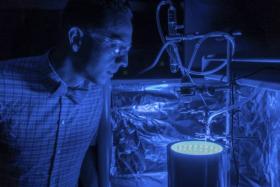
A chemistry professor has just found a way to trigger the process of photosynthesis in a synthetic material, turning greenhouse gases into clean air and producing energy all at the same time.
The process has great potential for creating a technology that could significantly reduce greenhouse gases linked to climate change, while also creating a clean way to produce energy.
“This work is a breakthrough,” said UCF Assistant Professor Fernando Uribe-Romo. “Tailoring materials that will absorb a specific color of light is very difficult from the scientific point of view, but from the societal point of view we are contributing to the development of a technology that can help reduce greenhouse gases.”
>> Read the Full Article
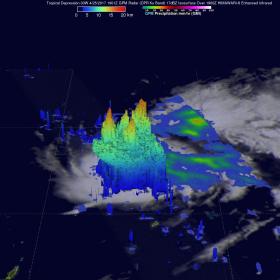
Tropical Depression 03W formed in the Pacific Ocean west of Guam on April 24, 2017, and data from the Global Precipitation Measurement Mission or GPM core satellite was used to look at the storm in 3-D.
Tropical Depression 03W formed on April 24 at 2100 UTC (5 p.m. EDT) about 201 nautical miles north-northwest of Yap.
The GPM core observatory satellite had an excellent view of Tropical Depression 03W or TD03W when it flew over on April 14, 2017 at 1901 UTC (3:01 p.m. EDT). The GPM satellite found that the newly formed tropical depression contained some very powerful convective storms. Intense storms in the middle of the organizing convective cluster were dropping precipitation at extreme rates. GPM's Microwave Imager (GMI) and Dual-Frequency Precipitation Radar (DPR) instruments unveiled tall convective storm towers on the eastern side of this cluster of storms that were dropping rain at a rate of over 215 mm (8.5 inches) per hour.
>> Read the Full Article
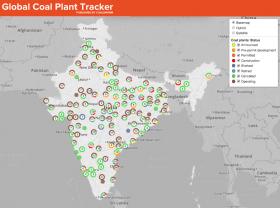
India will not be able to meet its Paris climate agreement commitments in the coming years if it carries through with plans to construct nearly 370 coal-fired power plants, according to University of California, Irvine and CoalSwarm researchers.
“India is facing a dilemma of its own making,” said UCI associate professor of Earth system science Steven Davis, co-author of a study published today in the American Geophysical Union journal Earth’s Future. “The country has vowed to curtail its use of fossil fuels in electricity generation, but it has also put itself on a path to building hundreds of coal-burning power plants to feed its growing industrial economy.”
>> Read the Full Article

Twenty-three experts involved in the study “Antarctica and the strategic plan for biodiversity,” recently published in PLoS Biology, debunked the popular view that Antarctica and the Southern Ocean are in a better environmental shape than the rest of the world. In fact, the difference between the status of biodiversity in the region and planet Earth as a whole is negligible.
>> Read the Full Article
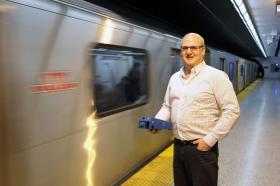
Airborne particulates on subway platforms and trains are up to 10 times higher than outside air, around three times higher than levels in Montreal’s Metro
A new study co-authored by U of T Engineering Professor Greg Evans shows that subways increase our personal exposure to certain pollutants, even as they decrease overall emissions – and that Toronto has the highest levels in Canada.
>> Read the Full Article
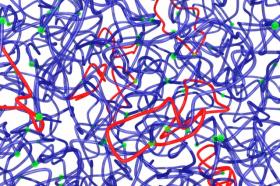
Plastic, rubber, and many other useful materials are made of polymers — long chains arranged in a cross-linked network. At the molecular level, these polymer networks contain structural flaws that weaken them.
Several years ago, MIT researchers were the first to measure certain types of these defects, called “loops,” which are caused when a chain in the polymer network binds to itself instead of another chain. Now, the same researchers have found a simple way to reduce the number of loops in a polymer network and thus strengthen materials made from polymers.
>> Read the Full Article



