
Such changes mean species threatened by climate change may find ways to adapt far quicker than through changes in DNA, which come with evolution.
Researchers studied the Winter Skate (Leucoraja ocellata), in waters that are around 7000 years old and significantly warmer than those where the rest of the species range is found. They observed many physical and functional adaptations which allow the species to cope with the significantly different set of environmental conditions observed in this shallow, warm habitat.
>> Read the Full Article
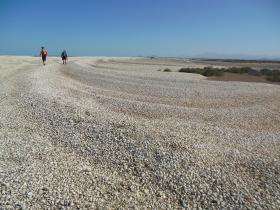
Scientists have begun to account for the topsy-turvy carbon cycle of the Colorado River delta – once a massive green estuary of grassland, marshes and cottonwood, now desiccated dead land.
“We’ve done a lot in the United States to alter water systems, to dam them. The river irrigates our crops and makes energy. What we really don’t understand is how our poor water management is affecting other natural systems – in this case, carbon cycling,” said Cornell’s Jansen Smith, a doctoral candidate in earth and atmospheric sciences.
>> Read the Full Article
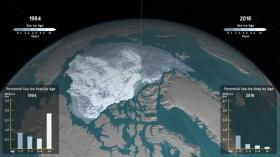
Arctic sea ice, the vast sheath of frozen seawater floating on the Arctic Ocean and its neighboring seas, has been hit with a double whammy over the past decades: as its extent shrunk, the oldest and thickest ice has either thinned or melted away, leaving the sea ice cap more vulnerable to the warming ocean and atmosphere.
“What we’ve seen over the years is that the older ice is disappearing,” said Walt Meier, a sea ice researcher at NASA’s Goddard Space Flight Center in Greenbelt, Maryland. “This older, thicker ice is like the bulwark of sea ice: a warm summer will melt all the young, thin ice away but it can’t completely get rid of the older ice. But this older ice is becoming weaker because there’s less of it and the remaining old ice is more broken up and thinner, so that bulwark is not as good as it used to be.”
>> Read the Full Article
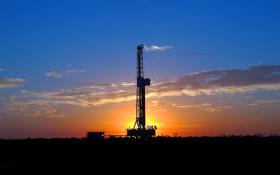
The bulk of methane emissions in the United States can be traced to a small number of “super emitting” natural gas wells, according to a new study.
“We’re finding that when it comes to natural gas leaks, a 50/5 rule applies: That is, the largest 5 percent of leaks are typically responsible for more than 50 percent of the total volume of leakage,” said study co-author Adam Brandt, an assistant professor of energy resources engineering at Stanford’s School of Earth, Energy & Environmental Sciences.
The findings, published online in the journal Environmental Science & Technology, could lead to more efficient strategies for sampling emissions and fixing the most significant leaks, said Brandt, who is also a senior fellow at Stanford’s Precourt Institute for Energy. By focusing on finding and fixing the biggest emitters, companies can significantly reduce the amount of methane leaking into the atmosphere.
>> Read the Full Article
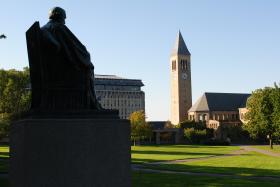
New Cornell University research suggests an economically viable model to scrub carbon dioxide from the atmosphere to thwart global warming.
The researchers propose using a “bioenergy-biochar system” that removes carbon dioxide from the atmosphere in an environmental pinch, until other removal methods become economically feasible and in regions where other methods are impractical. Their work appeared in the Oct. 21 edition of Nature Communications.
>> Read the Full Article

Global populations of vertebrates -- mammals, birds, reptiles, amphibians, and fish -- have declined by 58 percent between 1970 and 2012, states a new report from World Wildlife Fund (WWF). Animals living in the world’s lakes, rivers, and freshwater systems have experienced the most dramatic population declines, at 81 percent. Because of human activity, the report states that without immediate intervention global wildlife populations could drop two-thirds by 2020.
>> Read the Full Article
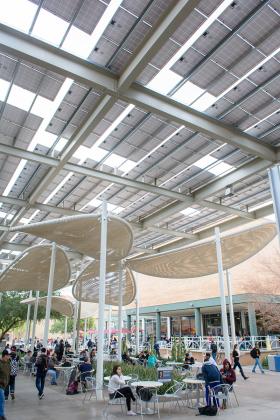
U.S. colleges and universities are increasingly deploying solar arrays and other forms of renewable energy. Yet most institutions have a long way to go if they are to meet their goal of being carbon neutral in the coming decades.
The soul of Arizona State University is Memorial Union, a hulking brick-and-glass community center that opens onto a sprawling pedestrian mall. Although the building sits at the heart of campus, its outdoor plaza was once virtually uninhabitable for four months each year, when summer temperatures in scorching Tempe often hover over 100 degrees. So in 2014, the university – Arizona’s leading energy consumer – completed construction on a PowerParasol, a 25-foot-tall shade canopy composed of 1,380 photovoltaic solar panels capable of producing 397 kilowatts of electricity.
>> Read the Full Article
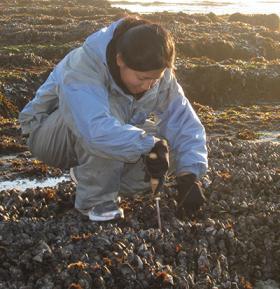
Scientists have detected high levels of a toxin produced by freshwater algae in mussels from San Francisco Bay. Although shellfish harvested from California's coastal waters are monitored for toxins produced by marine algae, they are not routinely tested for this freshwater toxin, called microcystin.
The toxin, which causes liver damage, is produced by a type of cyanobacteria (also known as blue-green algae) that thrives in warm, nutrient-rich water conditions. It has been found in many lakes and rivers in California, including the Sacramento and San Joaquin Rivers, which flow into the San Francisco Bay Delta, and in several Bay Area lakes.
>> Read the Full Article

Fine particulate matter air pollution may be associated with blood vessel damage and inflammation among young, healthy adults, according to new research in Circulation Research, an American Heart Association journal.
“These results substantially expand our understanding about how air pollution contributes to cardiovascular disease by showing that exposure is associated with a cascade of adverse effects,” said C. Arden Pope, Ph.D., study lead author and Mary Lou Fulton Professor of Economics at Brigham Young University in Provo, Utah.
>> Read the Full Article



