
When does aging really begin? Two Northwestern University scientists now have a molecular clue. In a study of the transparent roundworm C. elegans, they found that adult cells abruptly begin their downhill slide when an animal reaches reproductive maturity.
A genetic switch starts the aging process by turning off cell stress responses that protect the cell by keeping important proteins folded and functional. The switch is thrown by germline stem cells in early adulthood, after the animal starts to reproduce, ensuring its line will live on.
>> Read the Full Article
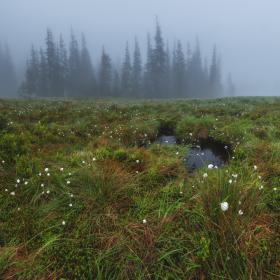
An entire ecosystem is at risk from the effects of climate change on the UK’s blanket bogs, scientists at the University of Leeds have warned.
These wetland habitats provide important feeding and nesting grounds for bird species including the dunlin, red grouse and golden plover. Blanket bogs are also the source of most of our drinking water and vital carbon stores.
The scientists warn that the effects of climate change, such as altered rainfall patterns and summer droughts, could drastically affect bog hydrology, which in turn could affect insect and bird populations.
>> Read the Full Article

In the virtual worlds of climate modeling, forests and other vegetation are assumed to bounce back quickly from extreme drought. But that assumption is far off the mark, according to a new study of drought impacts at forest sites worldwide. Living trees took an average of two to four years to recover and resume normal growth rates after droughts ended, researchers report today in the journal Science.
>> Read the Full Article

Wine-making is steeped in age-old traditions, but to address the threat of pests and concerns over heavy pesticide use, vintners are turning to science. With the goal of designing better grape breeds, scientists are parsing the differences between wild American grapes — which make terrible wine but are pest-resistant — and the less hardy grape species pressed for fine wines worldwide. They report their findings in ACS’ Journal of Agricultural and Food Chemistry.
>> Read the Full Article

The Faroe Islands' annual 'grindadráp', in which hundreds of pilot whales are slaughtered with knives and hooks, is a horrifying spectacle, writes David Lusseau. But unlike industrial whaling it poses no threat to the species. And is it really any worse than the industrial factory farming that we routinely ignore?
Anyone that signs a petition to stop the Faroese grindadráp only to go home and roast a chicken that never saw daylight or moved much when it was reared is a hypocrite.
In the mid-20th century pilot whaling still took place in many north Atlantic nations such as the US and Canada.
>> Read the Full Article

The United States marked an energy milestone this week as construction began on a pilot offshore wind program that will be used to test the economic feasibility of offshore wind energy. According to the Bureau of Energy, some four million megawatts of power lie in wait off the coasts and the shores of regions like the Great Lakes, where wind blusters far stronger than it does on land — and even a few miles an hour makes a big difference with turbines.
>> Read the Full Article
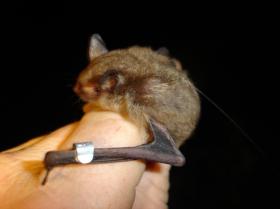
Fort Knox, a U.S. military installation located near Louisville, Kentucky, and famous for storing the nation’s gold bullion, has two of the largest known maternity colonies of federally endangered Indiana bats within the range of the species and the largest in Kentucky. On the same night, officials documented 451 and 478 Indiana bats emerging from two separate trees, both are records for this species. The first maternity colony of Indiana bats on Fort Knox (approximately 150 individuals) was discovered in 1999. The total number of Indiana bats in existence has declined due to white-nose syndrome, a devastating wildlife disease; a reduction and contamination of their insect food supply due to pesticide usage and disturbances by humans during the bats’ winter hibernation in caves and mines. During hibernation, bats cluster in groups of up to 500 per square foot, which means a single event can destroy a large number of bats.
>> Read the Full Article



