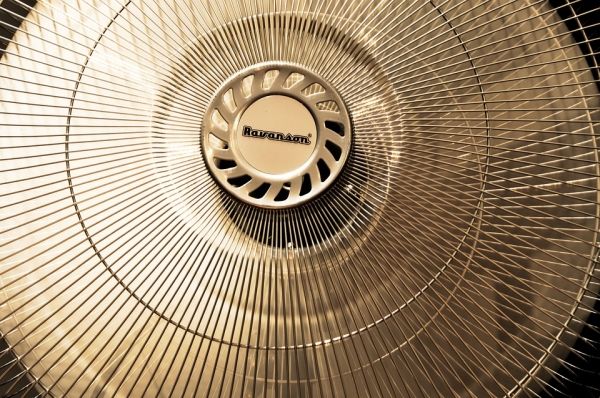
The biophysical modelling study, published in The Lancet Planetary Health, challenges outdated public health guidance that discourages fan use in temperatures higher than 35 degrees Celsius / 95 degrees Fahrenheit.
 ENN
Environmental News Network -- Know Your Environment
ENN
Environmental News Network -- Know Your Environment

The biophysical modelling study, published in The Lancet Planetary Health, challenges outdated public health guidance that discourages fan use in temperatures higher than 35 degrees Celsius / 95 degrees Fahrenheit.

Shifts in weather patterns induced by climate change will increase extreme heat and reduce rainfall across major crop growing regions, with impacts on agricultural production.
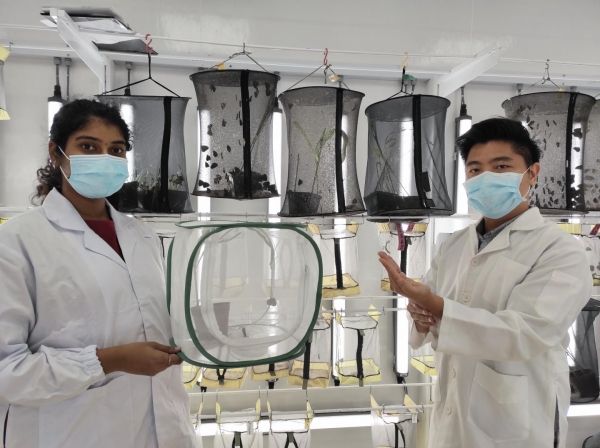
Many butterfly species bear distinct circular markings known as eyespots on their wings, and the functions of these rings of contrasting colours vary.
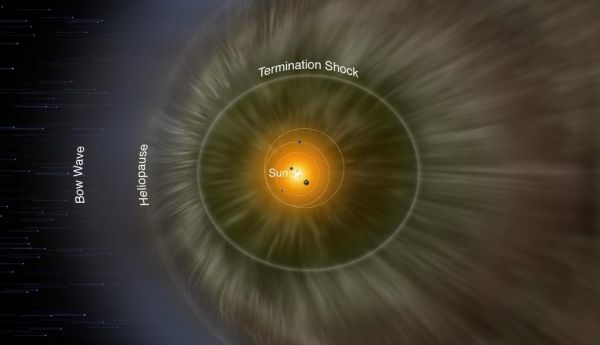
For the first time, the boundary of the heliosphere has been mapped, giving scientists a better understanding of how solar and interstellar winds interact.

In the era of big data, one may often need to quantitatively measure the agreement between two multi-dimensional datasets, which could either be a vector field or a combination of multiple scalar and vector fields.
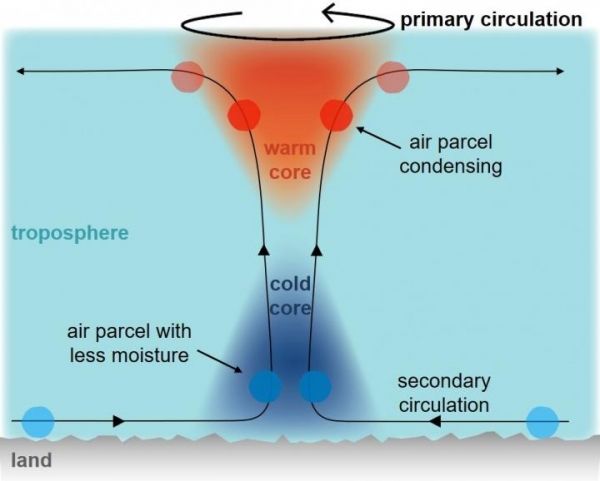
Hurricanes are powerful weather events born in the open sea. Fueled by moisture from the warm ocean, hurricanes can intensify in strength, move vast distances across the water, and ultimately unleash their destruction upon land.