
One of the strongest chemical bonds in organic chemistry is formed between carbon and fluorine, giving unique properties to chemical compounds featuring this group. Pharmaceutical researchers are very interested in carbon-fluorine bond containing molecules because of the way they mimic certain behaviors of biological compounds. However, the strength of the carbon-fluorine bond makes it difficult to remove and replace fluorine atoms in a molecule, greatly limiting the structures and types of chemicals that can be made.
>> Read the Full Article
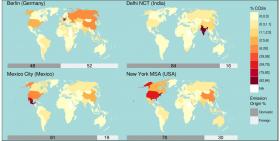
Greenhouse gas emissions caused by urban households’ purchases of goods and services from beyond city limits are much bigger than previously thought. These upstream emissions may occur anywhere in the world and are roughly equal in size to the total emissions originating from a city’s own territory, a new study shows. This is not bad news but in fact offers local policy-makers more leverage to tackle climate change, the authors argue in view of the UN climate summit COP23 that just started. They calculated the first internationally comparable greenhouse gas footprints for four cities from developed and developing countries: Berlin, New York, Mexico City, and Delhi. Contrary to common beliefs, not consumer goods like computers or sneakers that people buy are most relevant, but housing and transport – sectors that cities can substantially govern.
>> Read the Full Article

A discovery by Texas A&M AgriLife Research scientists in Dallasprovides new insights about the biological or circadian clock, how it regulates high water-use efficiency in some plants, and how others, including food plants, might be improved for the same efficiency, possibly to grow in conditions uninhabitable for them today.
>> Read the Full Article
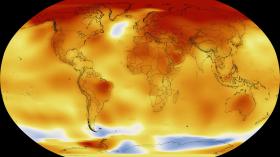
Climate negotiators gathering in Germany this week are still flush with the success of the Paris Agreement two years ago. But as they begin assembling a rule book for ensuring that the national pledges made in Paris are fulfilled, there comes a hard dose of reality. Those pledges, which constrain greenhouse gas emissions from now to 2030, will only deliver a third of the cuts needed to put the world on track to keep warming below the promised 2 degrees Celsius.
>> Read the Full Article

oving bus stops away from intersections would substantially reduce the amount of pollution bus riders are exposed to, UCLA scientists report today in the journal Environmental Pollution.
Research has shown that in many cities in the United States and internationally, bus riders frequently spend 15 to 25 minutes or more each way waiting for a bus.
>> Read the Full Article



