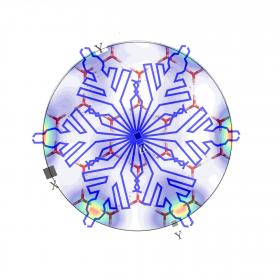
More than 400 years ago, renowned mathematician and scientist Johannes Kepler speculated about the creation of one of nature’s most angelic and unique shapes: the six-sided snowflake. Although atoms would not be discovered until two centuries later, Kepler openly pondered about the microscopic building blocks that lead to the ice crystal’s hexagonal formation, including the myriad of factors behind this recurring phenomenon.
>> Read the Full Article
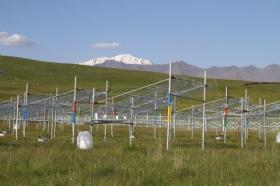
A warming climate could affect the stability of alpine grasslands in Asia’s Tibetan Plateau, threatening the ability of farmers and herders to maintain the animals that are key to their existence, and potentially upsetting the ecology of an area in which important regional river systems originate, says a new study by researchers in China and the United States.
>> Read the Full Article

Led by VTT Technical Research Centre of Finland, the COMBO-CFB project has developed a new innovative concept to increase solar energy production in the energy system. According to this research, the concept can reduce fuel consumption and emissions stressing the climate by more than 33 per cent. The concept is based on the combination of concentrated solar power (CSP) technology and a traditional power plant process into a hybrid plant which produces electricity on the basis of consumption.
>> Read the Full Article

In medical emergencies, time is of the essence. So is the quality of communication. A team of researchers from York University, University Health Network (UHN) and Trillium Health Partners studied text messages sent between nurses and physicians in deteriorating internal medicine patients requiring escalation to intensive care unit (ICU) to identify issues in failures to rescue. Looking at records from 2012 to 2014 at the Toronto General Hospital, the team found that message quality was positively linked to survival.
>> Read the Full Article
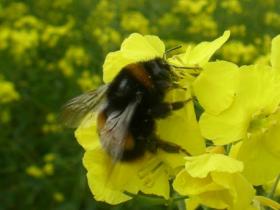
Neonicotinoid pesticides hinder wild queen bumblebees’ reproductive success, according to a new University of Guelph study.
The study is the first to link exposure to thiamethoxam — one of the most commonly used neonicotinoid pesticides — to fewer fully developed eggs in queens from four wild bumblebee species that forage in farmland.
>> Read the Full Article



