
In the wake of 2015 Climate Paris Agreements to limit global temperature below 2°C above pre-industrial levels, many governmental and private stakeholders have advocated for the introduction of policies to mitigate climate change. This would affect directly only the fossil-fuel and utility sector, but it would also expose indirectly many other economic sectors, in particular the energy-intensive sectors. The financial system can be affected due to its exposure to firms in the form of equity shares, bonds holdings and loans. However, the impact of climate policies on the financial system has remained unclear so far.
>> Read the Full Article

Americans used more renewable energy in 2016 compared to the previous year, according to the most recent energy flow charts released by Lawrence Livermore National Laboratory. Overall, energy consumption was nearly flat.
Each year, the Laboratory releases energy flow charts that illustrate the nation's consumption and use of energy. Americans used 0.1 quads (quadrillion BTU), more in 2016 than in 2015. A BTU, or British Thermal Unit, is a unit of measurement for energy; 3,400 BTUs is equivalent to about 1 kilowatt-hour.
>> Read the Full Article
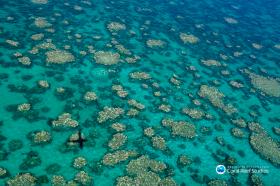
For the second time in just 12 months, scientists have recorded severe coral bleaching across huge tracts of the Great Barrier Reef after completing aerial surveys along its entire length. In 2016, bleaching was most severe in the northern third of the Reef, while one year on, the middle third has experienced the most intense coral bleaching.
>> Read the Full Article
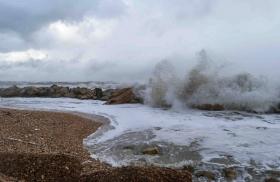
One way to understand how ocean acidity can change, for example, in response to rising carbon dioxide (CO2) levels, is to look to the history of seawater acidity. Dr. Itay Halevy of the Weizmann Institute of Science has looked to the distant past – all the way back to Earth’s earliest oceans. The model he developed, together with Dr. Aviv Bachan of Stanford University, suggests that the early oceans, right around the time that life originated, were somewhat acidic, and that they gradually became alkaline. The study, published in Science, sheds light on how past ocean acid levels were controlled by CO2in the atmosphere, an important process for understanding the effects of climate change.
>> Read the Full Article

Researchers from the University of Amsterdam (UvA) have invented a new catalyst that can efficiently convert carbon dioxide (CO2) to carbon monoxide (CO). This soon-to-be patented invention enables the sustainable utilisation of CO2, a potent greenhouse gas linked to climate change. If successful on a larger scale, this invention could provide a practical way to convert CO2 to useful chemicals.
The researchers behind the catalyst, UvA chemists Edwin Gnanakumar and Shiju Raveendran, are in the process of commercialising the catalyst with the help of Amsterdam Innovation Exchange (IXA), the university’s technology transfer office.
>> Read the Full Article
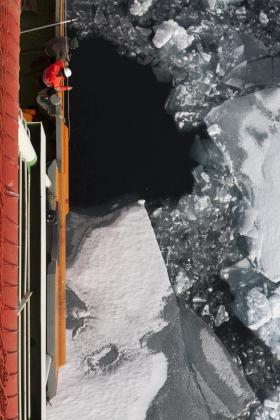
A University of Alaska Fairbanks study has determined that warmer water migrating from the Atlantic Ocean is a surprisingly powerful contributor to Arctic sea ice decline.
Research led by Igor Polyakov, a professor at UAF’s International Arctic Research Center and College of Natural Science and Mathematics, has found that Atlantic currents contribute to sea ice loss in the Arctic Ocean at a rate comparable to warming air temperatures.
>> Read the Full Article
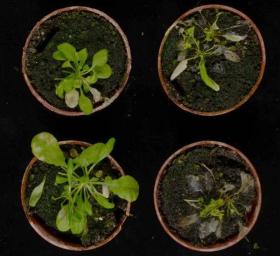
Each year, fungal infections destroy at least 125 million tons of the world’s five most important crops -rice, wheat, maize, soybeans and potatoes-, a quantity that could feed 600 million people. Fungi are not only a problem in the field, but also produce large losses in the post-harvest stage: during product storage, transport or in the consumer hands. Also, it should be noted that some fungi produce mycotoxins, substances capable of causing disease and death in both humans and animals. Farmers use fungicides to treat fungal infections, but these are not always 100% effective and, moreover, consumer demands pesticide-free products.
>> Read the Full Article



