
Air travel emits more than 650 million metric tons of carbon pollution annually – equivalent to the pollution from 136 million cars – making the increased use of sustainable biofuels a critical to reducing the industry’s carbon footprint. According to a first-of-its-kind scorecard released today by the Natural Resources Defense Council, the industry is making strides in adopting sustainable biofuels, with some airlines doing better than others as they incorporate these new fuels into their fleets. Air France/KLM is by far the leader of the pack.
>> Read the Full Article
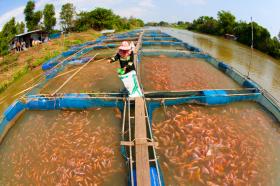
When it comes to organic certification, food producers must follow strict guidelines.
For an organic steak, for instance, the cow it came from has to be raised on organic feed, and the feed mix can't be produced with pesticides, chemical fertilizers or genetic engineering.
Now, the U.S. Department of Agriculture is considering a set of rules for organic farmed fish.
>> Read the Full Article

The more scientists study pigeons, the more they learn how their brains--no bigger than the tip of an index finger--operate in ways not so different from our own.
In a new study from the University of Iowa, researchers found that pigeons can categorize and name both natural and manmade objects--and not just a few objects. These birds categorized 128 photographs into 16 categories, and they did so simultaneously.
>> Read the Full Article
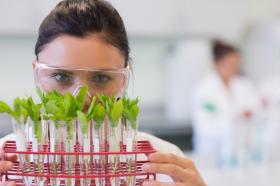
Crops and other plants are constantly faced with adverse environmental conditions, such as rising temperatures (2014 was the warmest year on record) and lessening fresh water supplies, which lower yield and cost farmers billions of dollars annually. Drought is a major environmental stress factor affecting plant growth and development. When plants encounter drought, they naturally produce abscisic acid (ABA), a stress hormone that inhibits plant growth and reduces water consumption. Specifically, the hormone turns on a receptor (special protein) in plants when it binds to the receptor like a hand fitting into a glove, resulting in beneficial changes – such as the closing of guard cells on leaves, called stomata, to reduce water loss – that help the plants survive.
>> Read the Full Article

Seabirds, aerial ocean predators, are known to amass harmful contaminants over their lifespan. Scientists believe this exposure to pollutants, such as blood mercury (Hg), cadmium (Cd), and persistent organic pollutants (POPs), negatively impacts survival rates as well as reproduction, therefore contributing to large-scale population declines. Although previously these assumptions were largely theoretical, recent research in the Proceedings of the Royal Society B involving blood samples from wandering albatrosses points to new conclusions.
>> Read the Full Article

Can smoke from fires intensify tornadoes? “Yes,” say University of Iowa researchers, who examined the effects of smoke—resulting from spring agricultural land-clearing fires in Central America—transported across the Gulf of Mexico and encountering tornado conditions already in process in the United States. The UI study, published in the journal Geophysical Research Letters, examined the smoke impacts on a historic severe weather outbreak that occurred during the afternoon and evening of April 27, 2011.
>> Read the Full Article
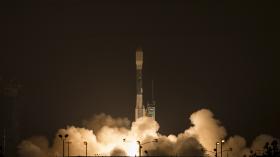
NASA successfully launched its first Earth satellite designed to collect global observations of the vital soil moisture hidden just beneath our feet.
The Soil Moisture Active Passive (SMAP) observatory, a mission with broad applications for science and society, lifted off at 6:22 a.m. PST (9:22 a.m. EST) Saturday from Vandenberg Air Force Base, California, on a United Launch Alliance Delta II rocket. NASA's Jet Propulsion Laboratory in Pasadena, California, manages SMAP for NASA's Science Mission Directorate in Washington, with instrument hardware and science contributions made by NASA's Goddard Space Flight Center in Greenbelt, Maryland.
About 57 minutes after liftoff, SMAP separated from the rocket's second stage into an initial 411- by 425-mile (661- by 685-kilometer) orbit. After a series of activation procedures, the spacecraft established communications with ground controllers and deployed its solar array. Initial telemetry shows the spacecraft is in excellent health.
>> Read the Full Article

This post originally was published on WRI.org.
How does bioenergy contribute to a sustainable food and climate future?
A new WRI paper finds bioenergy can play a modest role using wastes and other niche fuelstocks, but recommends against dedicating land to produce bioenergy. The lesson: do not grow food or grass crops for ethanol or diesel or cut down trees for electricity.
Even modest quantities of bioenergy would greatly increase the global competition for land. People already use roughly three-quarters of the world’s vegetated land for crops, livestock grazing and wood harvests. The remaining land protects clean water, supports biodiversity and stores carbon in trees, shrubs and soils -- a benefit increasingly important for tackling climate change. The competition for land is growing, even without more bioenergy, to meet likely demands for at least 70 percent more food, forage and wood.
>> Read the Full Article
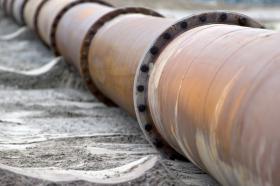
A team of researchers led by Kathryn McKain of Harvard University has recently discovered that approximately three percent of the natural gas delivered to Boston leaks directly into the atmosphere, taking with it a heavy load of methane, a known greenhouse gas. Their study doesn’t just have significant environmental implications: It’s estimated that the city is losing around $90 million to leaks every year. Correcting leaks is a relatively straightforward task, though it would require some investment in natural gas infrastructure and consumer education. However, these costs would be mitigated by the substantial savings offered if Boston was able to cut down on its methane problem.
>> Read the Full Article



