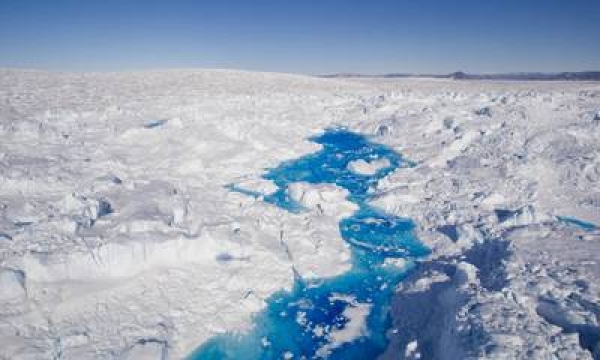
The ice sheet in Greenland faces many changes and one of them is hiding in plain sight - the snowy layer covering most of its surface.
The ice sheet in Greenland faces many changes and one of them is hiding in plain sight - the snowy layer covering most of its surface. Normally acting as a sponge for refreezing meltwater, this layer is important for the overall fate of the ice sheet, but it’s changing in ways researchers currently do not fully understand. Now, a substantial grant from the European Research Council (ERC) enables an international consortium to investigate this problem.
The top layer of the Greenland ice sheet consists of firn, a type of compressed snow with countless air pockets. The firn layer can be up to 100 meters thick and normally acts as a huge sponge, soaking up most of the meltwater created on the ice sheet’s surface each summer. About 90% of the entire ice sheet is covered by this firn layer, but as Arctic temperatures rise, this ice-sheet blanket is changing fast. Now, more meltwater is percolating into Greenland’s firn than previously.
„The Greenland ice sheet’s firn covered area is shrinking and becoming saturated with meltwater. We expect that the firn will lose a great deal of its current meltwater retention ability. We need to find out how the entire ice sheet will react to this,“ says Professor William Colgan from the Geological Survey of Denmark and Greenland (GEUS). He is part of a group of four researchers from four different European research institutions who just received a major grant of 13 million Euro from the European Research Councils (ERC) Synergy Grant to investigate this over the course of the next six years. The project is titled ‘Greenland’s Melting Firn and Ice Sheet Response’ -- or FirnMelt in short.
Read more at: Alfred-Wegener Institute
Schmelzwassersee auf dem 79 Grad Nord Gletscher (Photo Credit: Ole Zeising)