

On a recent mid-November evening, at precisely 7:12 p.m., a SpaceX Falcon 9 rocket lifted off from Cape Canaveral Space Force Station on the Florida coast.
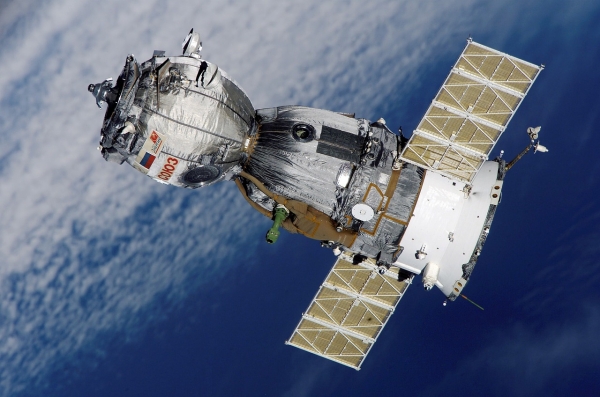
On a recent mid-November evening, at precisely 7:12 p.m., a SpaceX Falcon 9 rocket lifted off from Cape Canaveral Space Force Station on the Florida coast. It appeared to be a perfect launch. At an altitude of about 40 miles, the rocket’s first stage separated and fell back to Earth, eventually alighting in a gentle, controlled landing on a SpaceX ship idling in the Atlantic Ocean. The mission’s focus then returned to the rocket’s payload: 29 Starlink communication satellites that were to be deployed in low-Earth orbit, about 340 miles above the planet’s surface. With this new fleet of machines, Starlink was expanding its existing mega-constellation so that it numbered over 9,000 satellites, all circling Earth at about 17,000 miles per hour.
Launches like this have become commonplace. As of late November, SpaceX had sent up 152 Falcon 9 missions in 2025 — an annual record for the company. And while SpaceX is the undisputed leader in rocket launches, the space economy now ranges beyond American endeavors to involve orbital missions — military, scientific, and corporate — originating from Europe, China, Russia, India, Israel, Japan, and South Korea. This year the global total of orbital launches will near 300 for the first time, and there seems little doubt it will continue to climb.
Read more at: Yale Environment 360
Photo Credit: WikImages via Pixabay


