As tropical forests experience chronic drying and more extreme droughts due to climate change, some plants are adapting by growing longer root systems to reach water deep within soils, according to a study published in November in New Phytologist.
As tropical forests experience chronic drying and more extreme droughts due to climate change, some plants are adapting by growing longer root systems to reach water deep within soils, according to a study published in November in New Phytologist. Research led by Daniela Cusack, a Colorado State University associate professor in the Department of Ecosystem Science and Sustainability, and ESS Ph.D. student Amanda Longhi Cordeiro, found that tropical forest roots demonstrate flexibility under drying conditions, which may help reduce vulnerability to drought.
“This finding shows that even while tropical forest roots in surface soils die off under drought, representing a carbon loss to the forest, some trees are able to send roots deeper in search of moisture, potentially helping rescue the forest,” said Cusack. “How extensive this rescue effect might be is unknown, and the increase in deeper roots is not enough biomass to offset carbon losses from much more extensive root death in the surface soils.”
Home to some of the largest stores of carbon on Earth, tropical forests help prevent the severe effects of climate change; however, as rainfall decreases, carbon storage – in addition to ecosystem function and root dynamics – could change. To better understand these effects, CSU researchers have been studying root systems in tropical forests during drought.
Read More: Colorado State University
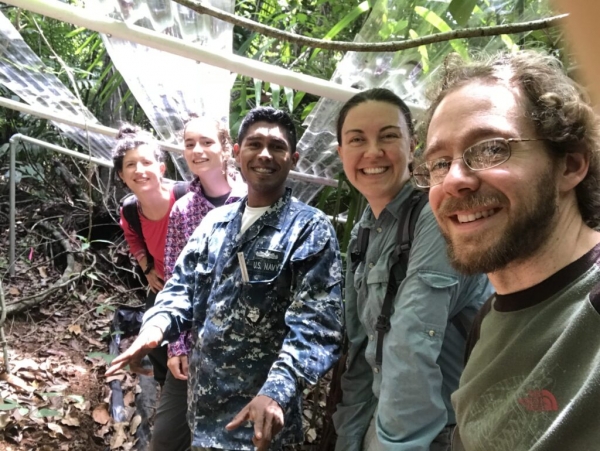
Image: Cusack (second from the right) and her research team worked in tropical forests across Panama. (Credit: Courtesy of Daniela Cusack/CSU)