

A University of Michigan study found that people in Ghana and across the Global South who recycle electronic waste face a difficult paradox: earning livelihoods to ensure survival comes at the cost of severe long-term exposure to toxicity and dramatic environmental pollution.
A University of Michigan study found that people in Ghana and across the Global South who recycle electronic waste face a difficult paradox: earning livelihoods to ensure survival comes at the cost of severe long-term exposure to toxicity and dramatic environmental pollution.
Every year, the world throws out 62 million tons of electronic waste, or e-waste, according to the United Nations. E-waste recycling recovers important minerals for global supply, such as copper, aluminum and lithium-ion batteries. But less than a quarter of this e-waste is captured and recycled formally, or under regulated conditions. The majority of e-waste is recycled informally, without protection, regulation or registration with the state. About 15% of the world’s e-waste is sent to Ghana.
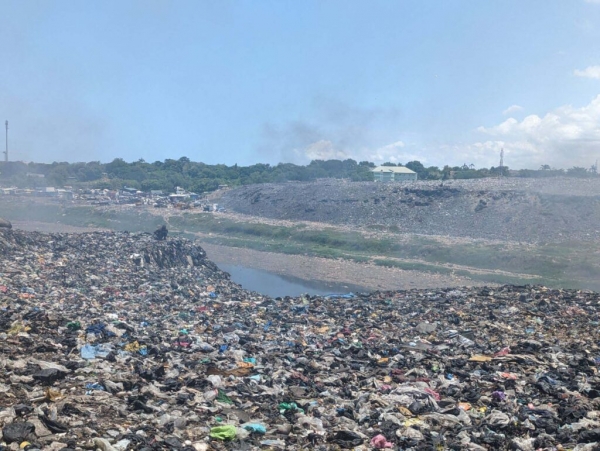
A team led by Brandon Marc Finn, assistant research scientist at the U-M School for Environment and Sustainability, examined Agbogbloshie, a settlement that has sprung up near one of the world’s biggest informal e-waste sites, located in Accra, Ghana. In a series of 55 field interviews in the settlement, Finn documented what he calls the “informal paradox.” In this paradox, the unregulated recycling work done by e-waste workers compromises their health as well as the environment of the city.
Read more at: University of Michigan
An informal settlement called Agbogbloshie has grown rapidly near the electronic waste recycling site in Accra, Ghana. (Photo Credit: Brandon Marc Finn)


