Unprecedented hot drought conditions are becoming more common, exposing trees to deadly stress and reducing the region’s ability to absorb anthropogenic carbon dioxide.
Unprecedented hot drought conditions are becoming more common, exposing trees to deadly stress and reducing the region’s ability to absorb anthropogenic carbon dioxide.
The Amazon rainforest is slowly transitioning to a new, hotter climate with more frequent and intense droughts — conditions that haven’t been seen on Earth for tens of millions of years.
The conclusions come from a new study led by the University of California, Berkeley, involving a large team of national and international scientists.
If society continues to emit high levels of greenhouse gases, the researchers predict that “hot drought” conditions could become more prevalent across the Amazon by 2100, occurring even during the wet season. This could lead to widespread tree dieoffs and impair Earth’s ability to deal with increasing levels of atmospheric carbon dioxide, since tropical forests worldwide absorb more human carbon emissions than any other biome. Recent reports found an increase in atmospheric carbon dioxide after severe droughts in the Amazon, showing that weather in the tropics has a measurable impact on the planet’s carbon budget.
Read More: University of California, Berkeley
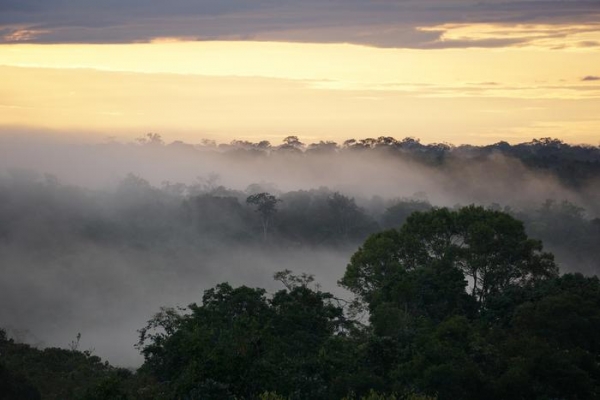
Image: The Amazon rainforest is being hit with more days of extreme drought that is leading to tree die-offs that will change the nature of these tropical sinks of carbon dioxide produced by the burning of fossil fuels. (Credit: Jeffrey Chambers/UC Berkeley)