

As rising temperatures, intensifying storms, increased flooding, and land degradation impact communities, residents in vulnerable areas are navigating difficult questions: Do they stay and adapt, or should they leave?
As rising temperatures, intensifying storms, increased flooding, and land degradation impact communities, residents in vulnerable areas are navigating difficult questions: Do they stay and adapt, or should they leave? Yet, the issue may not just come down to those two rigid binaries.
In a commentary in Nature Climate Change co-authored by Brianna Castro, assistant professor of urban sustainability, an international team of scientists argue that many people affected by climate change don’t fit neatly into the “move” or “stay” dichotomy. Instead, individuals and families are drawing on intergenerational ties, social networks, cultural roots and identity to navigate risks and plan for the future. They may relocate temporarily or seasonally, instead of a permanent move. The researchers identified this alternative as “tethered resilience,” in which climate impacts are secondary in the decision to migrate compared to economic, social, cultural, and demographic factors.
The torrent caused extensive flash floods and landslides in Sumatra’s rugged terrain. Streams and rivers rapidly overflowed with sediment-laden, debris-filled waters that swept through villages, cities, and towns. News reports suggest that the damage was worsened by an earthquake that struck on November 27 and the abundance of loose piles of timber in the region that became destructive battering rams in high water. As of December 4, Indonesian authorities reported several hundred deaths and more than 700,000 displaced people.
Read more at: Yale School of the Environment
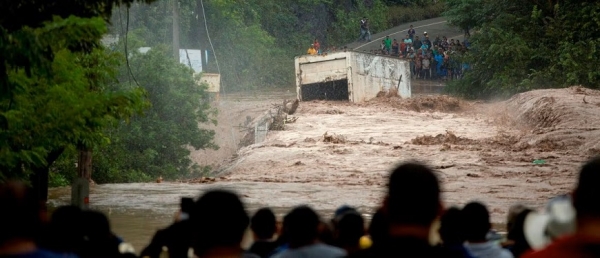
Heavy flooding from the Rio Grande submerges vehicles in Camotan, Guatemala after Hurricane Lota hits on November 18, 2020. (Photo Credit: Morena Perez Joachin/picture-alliance/dpa/AP Images)


