Urbanisation and a warmer climate means that more people want to swim in canals, harbours, and urban beaches.
Urbanisation and a warmer climate means that more people want to swim in canals, harbours, and urban beaches. However, this means that they may swimming close to where treated wastewater and stormwater are discharged – including bacteria, viruses, and other pathogens that might make people sick. A new method tested in Sweden by Lund University, can provide both faster and more complete answers on whether the water is safe for swimming or not.
An innovation from researchers at Lund University, Sweden Water Research, and Kristianstad University has been successfully tested in Helsingborg, where the response time has been reduced from several days to just a few hours.
“Regular monitoring is essential to ensure that the water is safe. E. coli bacteria are so-called indicator bacteria, and are used as a warning signal that microorganisms that can cause illness might be in the water” says Catherine Paul, associate professor in water resources engineering at Lund University.
Currently, the most common method is to culture E. coli. The results take a few days, which increases the risk of unnecessary exposure to bacteria and potentially also viruses and other pathogens.
Read More: Lund University
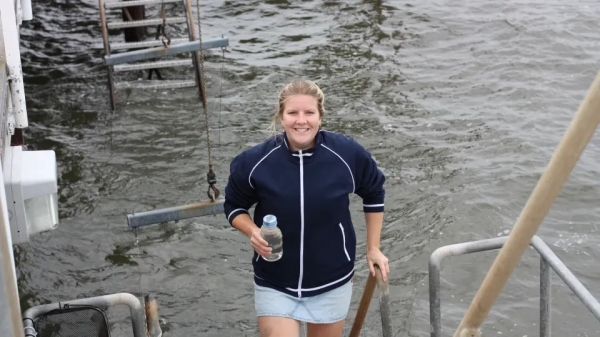
Image: Isabel Erb with a water sample (Photo Credit: Catherine Paul)