Clouds, smoke and fog may darken the skies, but sediment, algae blooms and organic matter can turn day into night on the seafloor.
Clouds, smoke and fog may darken the skies, but sediment, algae blooms and organic matter can turn day into night on the seafloor. That’s why an international team of scientists have created the first framework to identify and compare these marine blackouts. The study, published in Communications Earth & Environment, introduces the concept of a marine darkwave: a short-term but intense episode of underwater darkness that can severely impact kelp forests, seagrass beds and other light-dependent marine life.
“We have long known that light levels are critical for photosynthetic organisms — like algae, seagrasses and corals — and that factors that reduce light to the seafloor can impact them,” said co-author Bob Miller, a research biologist at UC Santa Barbara’s Marine Science Institute. “This study creates a framework for comparing such events, which we call darkwaves.”
The researchers aimed to create a common system for comparing these events across the globe. “Light is a fundamental driver of marine productivity, yet until now we have not had a consistent way to measure extreme reductions in underwater light,” said lead author François Thoral, a postdoctoral fellow at the University of Waikato and Earth Sciences New Zealand.
Read more at: University of California Santa Barbara
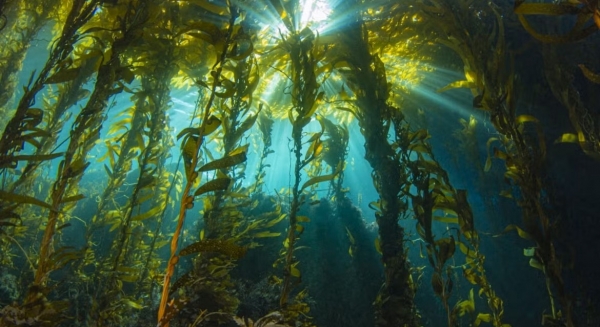
Declines in water clarity are a pressing concern for coastal ecosystems. (Photo Credit: UC Santa Barbara)