

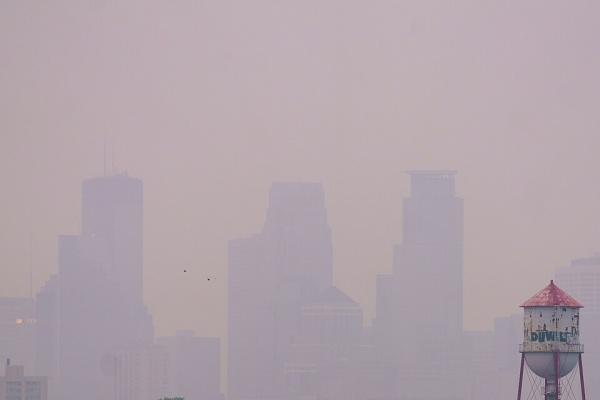
A new analysis of air quality data from the past 70 years shows that Canada’s record wildfire smoke in 2023 is part of a broader, continent-wide trend toward smokier skies across North America.
A new analysis of air quality data from the past 70 years shows that Canada’s record wildfire smoke in 2023 is part of a broader, continent-wide trend toward smokier skies across North America.
“What we found is a big east-to-west shift,” says lead author Robert D. Field, an associate research scientist at the NASA Goddard Institute for Space Studies, part of the Columbia Climate School. “Air quality improved in the east as industrial emissions dropped, and at the same time it degraded in the west because of more fire.”
Published in Earth’s Future, the paper includes a review of climate projection studies indicating that, on average, warming is likely to continue to lead to drier, more fire-prone summers across many parts of Canada. Although the projected changes may differ by region, and it’s not certain how burned areas will change in the future, the projections align with the increases in burned area seen over the past decade.
The findings point to a future in which fire-weather conditions driven by climate change play a growing role in shaping summer air quality in both the United States and Canada. Wildfire smoke is a public health concern because it can’t be reduced through the same regulatory tools used to address fossil fuel pollution.
Read More: Columbia Climate School
Photo Credit: Chad Davis via Wikimedia Commons



.jpg)