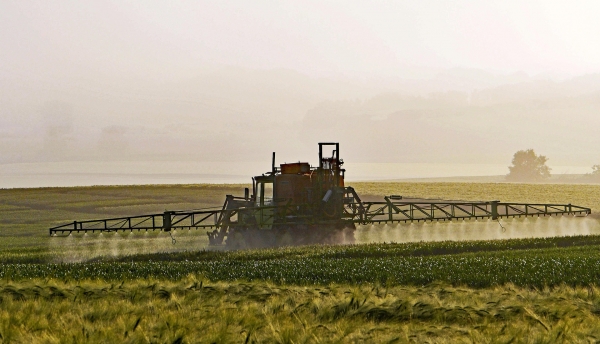
Seventy percent of soils in Europe are contaminated with pesticides.
Seventy percent of soils in Europe are contaminated with pesticides. A Europe-wide study co-led by researchers of the University of Zurich now shows that their effects on soil life are substantial, as pesticides suppress various beneficial soil organisms. To protect soil biodiversity, the findings should be taken into account in current pesticide regulations.
Life beneath our feet is essential for maintaining critical ecosystem functions and services like food production, carbon storage, erosion control and water regulation. An international study now provides the first comprehensive quantitative evidence of the prevalence and impact of agricultural pesticides in European soils. According to the results, 70 percent of European soils are contaminated with pesticides. “This contamination has a major impact on various beneficial soil organisms, such as mycorrhizal fungi and nematodes, impairing their biodiversity,” says Marcel van der Heijden, professor at the Department of Plant and Microbial Biology of the University of Zurich (UZH), research group leader at Agroscope, and one of the study leaders.
Soil Samples from 26 European Countries
The study, published in the renowned Nature journal , was conducted by an international panel of 10 European research institutions including the Joint Research Centre of the European Union, the University of Vigo in Spain, Agroscope and UZH. The researchers investigated the effects of 63 common pesticides on our soils. To this end, they took a total of 373 soil samples from fields, forests and meadows across 26 European countries.
Read More: University of Zurich
Photo Credit: hpgruesen via Pixabay