

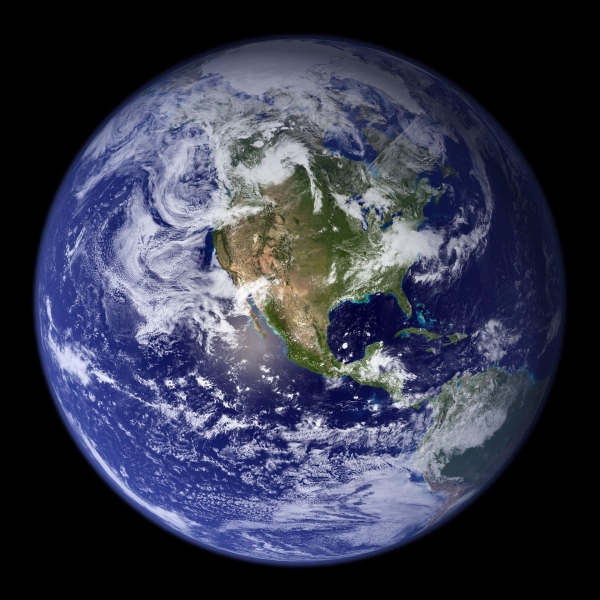
Earth's ecosystems are endangered by climate change and many are becoming less resilient as they come under increasing pressure.
Earth's ecosystems are endangered by climate change and many are becoming less resilient as they come under increasing pressure. Ecological tipping points – rapid changes toward a new state – play a crucial role in this context. However, predicting whether the Amazon will change from a rainforest into a savannah, or how quickly Greenland’s ice sheet may disappear is extremely difficult. One problem in many ecosystems is seasonal cycles which make understanding slower, climate-change driven, changes more difficult.
This is where a study by researchers of the University of Potsdam, the Potsdam Institute for Climate Impact Research, and the Technical University of Munich comes in. The authors developed a new method for measuring the resilience of ecosystems and expanded the types of data that can be assessed within the framework of tipping points. To test their approach, they applied it to two real-world examples: the Amazon rainforest and mountain glaciers in Alaska and Asia.
“Glacier surges are a dangerous phenomenon in many parts of the world, and predicting them is complicated,” says the lead author Taylor Smith from the Institute of Geosciences at the University of Potsdam. “With our method, we can now test how stable a glacier is and document predictions of surges multiple years in advance.”
Read More at: University of Potsdam
Photo Credit: marionhagen via Pixabay


