

A thousand times faster than conventional testing, an ion beam approach to qualifying materials for use in the cores of advanced nuclear reactors is advancing through stages of approval by the industry standards organization ASTM.
A thousand times faster than conventional testing, an ion beam approach to qualifying materials for use in the cores of advanced nuclear reactors is advancing through stages of approval by the industry standards organization ASTM.
The methodology, developed with leadership by University of Michigan Engineering, will be presented at a special event hosted by the Electric Power Research Institute, March 10-11 in Charlotte, North Carolina.
Many have pinned hopes on advanced nuclear power to provide emissions-free electricity and power AI data centers, but the old way of ensuring materials can survive reactor cores can’t keep up with the lifetime radiation doses inside advanced fission reactors and proposed fusion reactors.
Read more at: University of Michigan
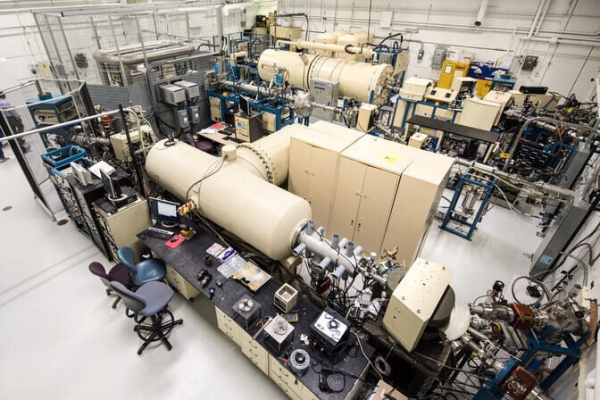
The Michigan Ion Beam Laboratory (MIBL). Here, three accelerators are combined to produce radiation damage that mimics both fission and fusion reactor damage. This faster method of testing materials to ensure that advanced reactor components survive for their full design lives will be presented at the Electric Power Research Institute March 10-11. (Photo credit: Ovidiu Toader, Michigan Ion Beam Laboratory, University of Michigan).


