

The tool flagged vulnerable mangrove patches a decade in advance, offering a path toward preventive conservation.
The tool flagged vulnerable mangrove patches a decade in advance, offering a path toward preventive conservation.
Scientists from UC San Diego’s Scripps Institution of Oceanography and the Centro para la Biodiversidad Marina y la Conservación in Mexico have developed a tool that identifies mangrove patches facing the greatest risk of degradation.
The tool, called the Mangrove Threat Index and described in a new study published in the journal Frontiers in Ecology and the Environment, aims to provide an empirical argument for conservation before vulnerable ecosystems are lost rather than after, said the researchers. The index yields a single number that local planners and communities can use to prioritize specific mangrove patches for protection.
Mangroves are coastal forests that buffer shorelines from storms, store carbon and provide nursery habitat for many species of fish. Despite the tremendous intrinsic and economic importance of the ecosystem services that mangroves provide, roughly half of the world’s mangrove forests are at risk of collapse.
Read More: University of California - San Diego
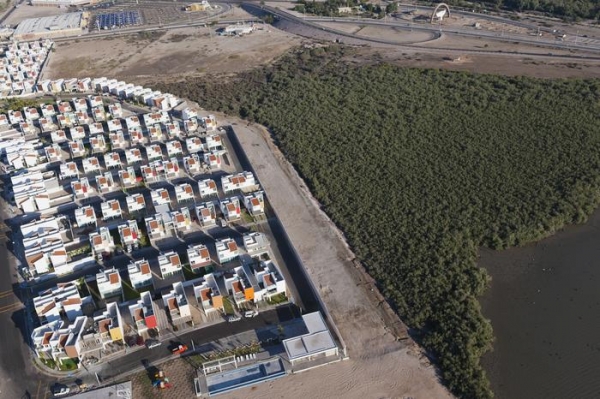
Image: Mangroves in La Paz Bay, Mexico, stand at the edge of urban expansion, where development meets one of the most valuable coastal ecosystems on Earth. Credit: Octavio Aburto/Scripps Institution of Oceanography. (Credit: Octavio Aburto/Scripps Institution of Oceanography)


