

For decades, scientists have worked to improve predictions of El Niño-Southern Oscillation (ENSO), a climate powerhouse that can cause droughts, flooding, marine heatwaves, and more around the world.
For decades, scientists have worked to improve predictions of El Niño-Southern Oscillation (ENSO), a climate powerhouse that can cause droughts, flooding, marine heatwaves, and more around the world. Researchers from the University of Hawai‘i at Mānoa recently published a study showing that they can skillfully predict El Niño and La Niña 15 months ahead of time using only observations of the ocean surface temperature and height–no complex climate model needed.
“Many of today’s leading forecast systems are either computationally expensive dynamical climate models, statistical models that rely on ENSO knowledge built over decades of research, or AI approaches that require large amounts of training data and are often harder to interpret physically,” said Yuxin Wang, lead author of the study and postdoctoral researcher with the UH Sea Level Center in the UH Mānoa School of Ocean and Earth Science and Technology (SOEST). “Our simpler, data-driven empirical climate model, built only from ocean observations related to two core climate memories known for over 50 years, achieves ENSO forecast skill comparable to, and in some cases better than, many of today’s more complex climate models and leading AI-based approaches.”
Read More at: University of Hawaii at Manoa
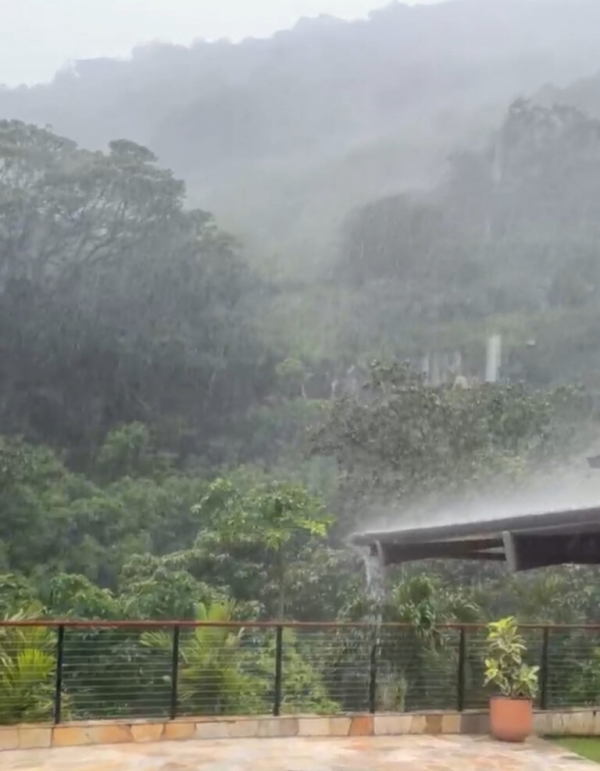
Heavy rainfall pours over a steep tropical landscape in Hawaiʻi. (Photo Credit: UHM SOEST)


