Thousands of earthquakes affecting Portugal’s São Jorge Island in the Azores in March 2022 were triggered by a vast sheet of magma (molten rock) rising from more than 20km below Earth’s surface and stalling just 1.6km beneath the island, finds a new study led by UCL researchers.
Thousands of earthquakes affecting Portugal’s São Jorge Island in the Azores in March 2022 were triggered by a vast sheet of magma (molten rock) rising from more than 20km below Earth’s surface and stalling just 1.6km beneath the island, finds a new study led by UCL researchers.
Much of this ascent occurred with little seismic activity, with most earthquakes occurring after the magma stopped ascending. The magma rose over just a few days – there was enough of it to fill 32,000 Olympic-sized swimming pools, the study suggested.
Lead author Dr Stephen Hicks, based at UCL Earth Sciences, said: “This was a stealthy intrusion. Magma moved quickly through the crust, but much of its journey was silent, making it difficult to forecast whether an eruption would occur.”
For the study, published in the journal Nature Communications, an international team reconstructed the detailed underground movement of magma using seismometers on land and on the Atlantic seafloor to precisely map where earthquakes were occurring, as well as data from satellites and GPS to see how the ground moved at the time.
Read More: University College London
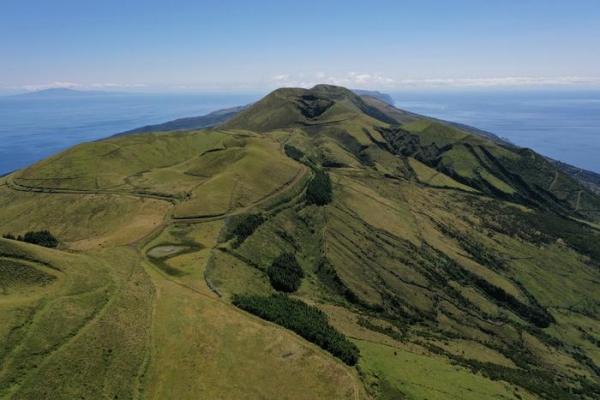
Image: São Jorge Island as viewed by drone. Part of the island rose by 6 cm, confirming that magma had entered the shallow crust (Credit: Ricardo Ramalho)