

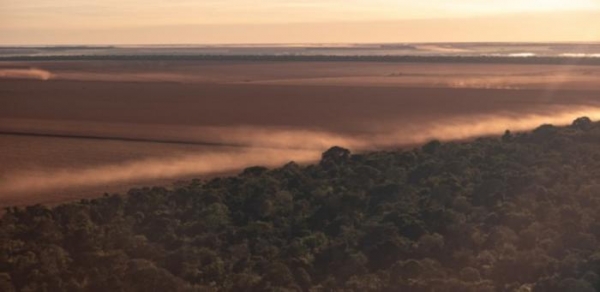
Even after fires, severe droughts, and windstorms, the vegetation in degraded Amazonian forests demonstrates a high capacity for regeneration, including tree species.
Even after fires, severe droughts, and windstorms, the vegetation in degraded Amazonian forests demonstrates a high capacity for regeneration, including tree species. However, recovery occurs under new ecological conditions, resulting in a loss of diversity and increased vulnerability to new disturbances.
On April 20, research was published in the Proceedings of the National Academy of Sciences (PNAS), one of the world’s most cited scientific journals, showing that vulnerable species are being replaced by more resilient, generalist species. According to the authors, this indicates the formation of homogeneous forests but not a trend toward savannization, as some previous studies had suggested. This process reinforces the resilience of the biome.
However, the study, which was based on 20 years of field monitoring and was led by Brazilian researchers, highlights that the recovered areas are vulnerable to increasingly frequent extreme events in the biome, as well as to the impacts of deforestation and climate change. In addition to intensifying droughts and fires, global warming impairs ecosystem services such as water regulation and carbon sequestration.
Read More at: Fundacao de Amparo a Pesquisa do Estado de São Paulo
The research was based on 20 years of field monitoring (Photo Credit: Paulo Brando)


