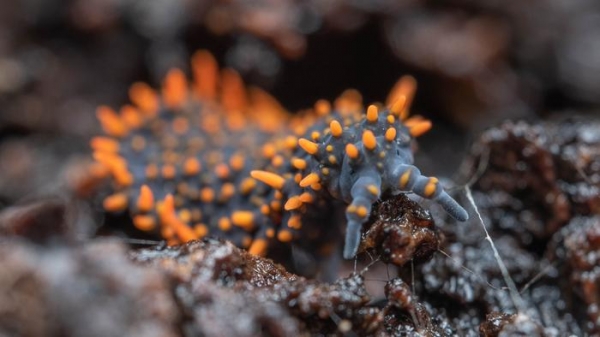
Soils are home to some of the most diverse animal communities on Earth. These animals – including nematodes, springtails, mites, earthworms, spiders and other arthropods – drive decomposition, regulate microbial communities and contribute to nutrient cycling.
Soils are home to some of the most diverse animal communities on Earth. These animals – including nematodes, springtails, mites, earthworms, spiders and other arthropods – drive decomposition, regulate microbial communities and contribute to nutrient cycling. However, little is known about how these animals’ “trophic diversity” – meaning the variety of feeding activities – is affected by land use and climate. An international research team led by the University of Göttingen has now shown that soil animal communities have greater trophic diversity in agricultural ecosystems and in tropical regions. The study analysed carbon and nitrogen stable isotope ratios from over 17,000 soil samples, covering 28 major groups of organisms from 456 sites across 19 countries. The results were published in Nature Ecology & Evolution.
The researchers found that animals that feed on microorganisms – such as nematodes, springtails and mites – had higher trophic diversity than those that feed on dead organic matter or live as predators. This suggests that microbial feeders exploit a particularly broad range of resources and occupy more varied trophic positions – meaning where they are on the interconnected food chains in an ecosystem. One of the most surprising findings was that soil animal trophic diversity was about 32% higher in agricultural systems than in woodlands. This contrasts with the common expectation that intensive land use generally simplifies ecological communities. The researchers suggest that agricultural environments, where resources are often more limited and patchily distributed, may force soil animals to broaden their diets or divide resources more strongly among groups of organisms.
Read more at: University of Gottingen
This springtail (Collembola) is one of the tiny creatures in soil that, along with other animals like spiders and earthworms, contributes to nutrient cycling and decomposition. Researchers analysed soil from 19 countries to explore how the variety of feed (Photo Credit: Frank Ashwood)