

Even as temperatures rise on Earth’s surface and in the lower atmosphere, the planet’s upper atmosphere has cooled dramatically.
Even as temperatures rise on Earth’s surface and in the lower atmosphere, the planet’s upper atmosphere has cooled dramatically. This paradoxical pattern is a well-known sign of humanity’s climate impacts—but until now, the underlying physics has remained a mystery.
In a new study, researchers from Columbia University describe the phenomenon’s mechanics, illuminating how it is largely determined by the way carbon dioxide (CO2) interacts with different wavelengths of light.
“It explains a phenomenon that’s a fingerprint of climate change, has been known to occur for decades, and has not been understood,” says Robert Pincus, a research professor of ocean and climate physics at Lamont-Doherty Earth Observatory, which is part of the Columbia Climate School, and co-author of the study published in Nature Geoscience.
Read more at: Columbia Climate School
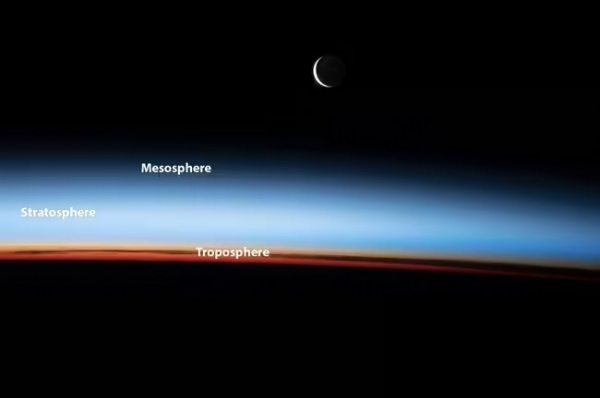
View of Earth taken during International Space Station Expedition 66. (Photo Credit: NASA)


