

A fish–microbe partnership may produce minerals that help shape the marine carbon cycle.
A fish–microbe partnership may produce minerals that help shape the marine carbon cycle.
New research reveals a potential link between the gut microbes of a fish and global ocean processes, offering new insight into how marine ecosystems help regulate ocean chemistry and the marine carbon cycle.
The study, led by former graduate student Anthony Bonacolta in the Department of Marine Biology and Ecology at the University of Miami Rosenstiel School of Marine, Atmospheric, and Earth Science, found that symbiotic gut microbes may work in tandem with marine fish to produce a form of calcium carbonate that influences overall ocean health and serves as a key carbon sink. This process, long attributed primarily to fish physiology, may in fact depend on a previously unrecognized microbial partnership.
Bony fish, called teleosts, drink seawater to stay hydrated. Inside their intestines, they process excess calcium and carbonate ions and excrete them as solid pellets of calcium carbonate called ichthyocarbonates.
Read More: University of Miami Rosenstiel School of Marine, Atmospheric, and Earth Science
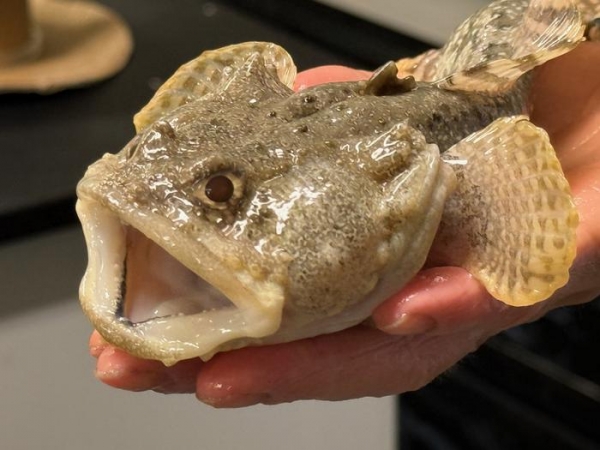
Image: Gulf toadfish (Opsanus beta) (Credit: Diana Udel, University of Miami Rosenstiel School)


