For decades, climate scientists have issued warnings about positive global warming feedbacks, vicious cycles in the Earth system in which rising temperatures from burning fossil fuels beget more warming.
For decades, climate scientists have issued warnings about positive global warming feedbacks, vicious cycles in the Earth system in which rising temperatures from burning fossil fuels beget more warming. The best tools we have to understand these feedback mechanisms are climate models, which simulate how the atmosphere, oceans, and land will respond under different emissions scenarios. Many feedbacks, like the loss of sea ice as the planet warms, are well-accounted for. Others, such as changes in cloud cover, remain far more uncertain but are still included in models. Feedbacks in which ecosystems emit more greenhouse gases to the atmosphere are so complex that they are often left out entirely.
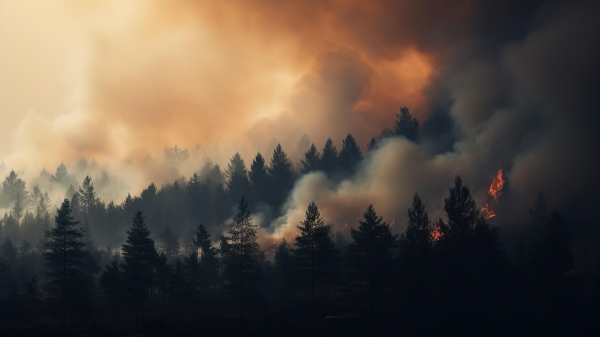
For example, how much more carbon dioxide will be emitted as wildfires increase? How much more methane will bubble up from fermenting wetlands or seep from thawing permafrost? Remarkably, these so-called warming-induced emissions are poorly represented or absent from the most influential climate models — that is, those that inform the assessments of the U.N. Intergovernmental Panel on Climate Change (IPCC).
A new study from a group of leading climate researchers suggests this information gap could make it even more difficult for nations to limit the rise in global average temperatures to well below 2 degrees C, the target set by the Paris Climate Agreement. The study found that emissions from natural systems could add as much as 0.6 degrees C to the rise in global average temperatures. That’s in line with earlier work that suggests such emissions could shorten by 25 percent the amount of time it takes to exceed 2 degrees C of warming. Shortcomings in climate modeling, scientists warn, could lead countries to overestimate how much fossil fuels can be burned before breaching climate targets.
Read More: Yale Environment 360
Photo Credit: Vlad_Aivazovsky via Pixabay