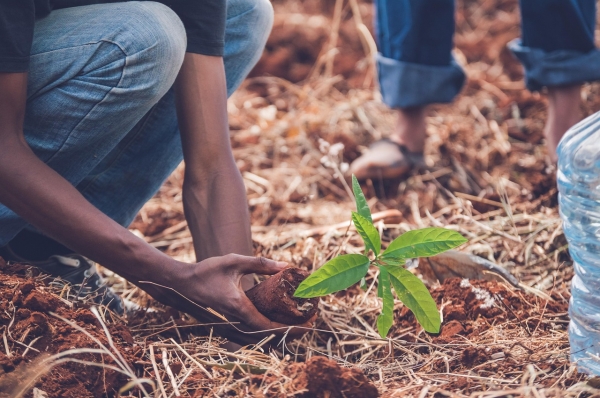
Planting trees is widely promoted as a natural solution to climate change.
Planting trees is widely promoted as a natural solution to climate change. But a new study led by researchers from the Institute of Atmospheric Physics at the Chinese Academy of Sciences finds that the hydrological consequences of reforestation depend critically on how much the world warms.
Using the latest Earth system model simulations from the CMIP6 project, the research team compared the effects of the same large‑scale reforestation activity under two contrasting future scenarios: a low‑warming pathway (SSP1‑2.6) and a high‑warming pathway (SSP3‑7.0). They focused on land water availability — the balance between precipitation and evaporation — which is essential for ecosystems, agriculture, and human water use.
“The same trees, planted at the same scale, lead to nearly opposite outcomes depending on the background climate,” said Dr. TANG Tao, lead author of the study published in One Earth. “Under low warming, reforestation slightly increases global water but widens the gap between wet and dry regions — the rich get richer. Under high warming, it reduces overall water availability but makes water distribution more equal.”
Read More: Institute of Atmospheric Physics, Chinese Academy of Sciences
Photo Credit: imsogabriel_Stock via Pixabay