

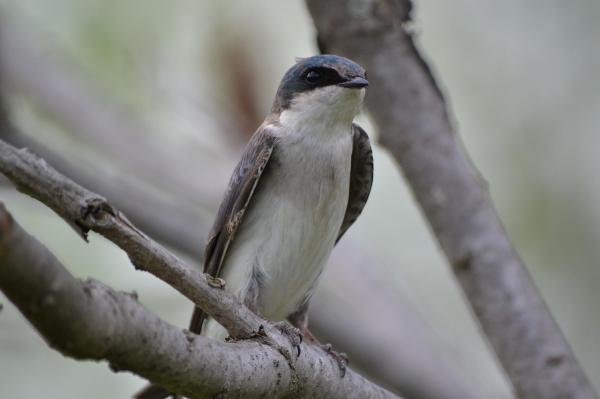
Tree swallows in the northern U.S. and Canada face the greatest risk from climate change despite responding to temperature the same way as tree swallows in the southern U.S, according to a new study led by Cornell researchers that analyzed nearly 95,000 nests across five decades.
Tree swallows in the northern U.S. and Canada face the greatest risk from climate change despite responding to temperature the same way as tree swallows in the southern U.S, according to a new study led by Cornell researchers that analyzed nearly 95,000 nests across five decades.
The findings, published July 7 in Proceedings of the National Academy of Sciences, reveal a critical timing squeeze for tree swallows in the northern half of the United States and Canada, putting them at risk.
Tree swallows are aerial insectivores, a group of birds that has experienced steep population declines across North America. As birds that eat flying insects, they serve as important indicators of ecosystem health and climate impacts.
The collaborative effort involved 28 research groups across North America, plus data collected by 40,000 people for participatory science programs including NestWatch, run by the Cornell Lab of Ornithology. The team analyzed tree swallow nesting records and temperature from 1966 to 2024 at 123 sites spanning Alaska to the southern United States, in one of the most comprehensive analyses of geographic climate sensitivity ever conducted for a wild bird species. The team also used data that birdwatchers shared with the Lab of Ornithology’s eBird program to estimate arrival time of swallows on the breeding grounds.
Read More: Cornell University
Photo Credit: ArjanneHolsappel via Pixabay


