

A new study, led by experts at the University of Nottingham, suggests a pet gecko with an unusually high risk of tumours may be a promising model for understanding how cancer develops and spreads.
A new study, led by experts at the University of Nottingham, suggests a pet gecko with an unusually high risk of tumours may be a promising model for understanding how cancer develops and spreads.
The findings of the study, which are published in BMC Biology, could help to explain why some animals frequently get cancer and others rarely do.
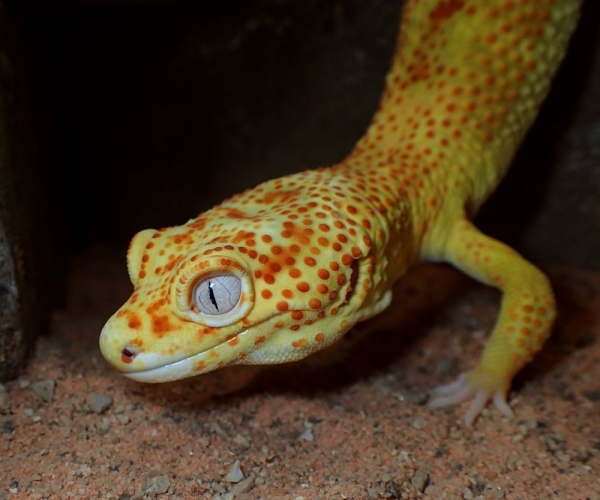
While some reptiles, such as turtles and tortoises, rarely develop cancer, one colour variety of the leopard gecko, known in the pet trade as the “lemon frost” morph, develops aggressive tumours in 80% of individuals. This new research has identified genomic changes associated with this cancer, some affecting the same genes and biological processes involved in human cancers.
The study was led by Dr Ylenia Chiari from the School of Life Sciences at the University of Nottingham.
Read More: University of Nottingham
Image: Lemon Frost gecko’ – Credit: Dr Tony Gamble, Marquette University


