For lakes across the Northern Hemisphere, winter ice is more than a frozen surface. It is a seasonal regulator that shapes underwater ecosystems and energy balance. But as the planet warms, this frozen season is disappearing faster than expected.
For lakes across the Northern Hemisphere, winter ice is more than a frozen surface. It is a seasonal regulator that shapes underwater ecosystems and energy balance. But as the planet warms, this frozen season is disappearing faster than expected.
A new study has revealed that lake ice loss accelerates sharply once winter temperatures cross critical thresholds, leaving many mid-latitude lakes on the brink of heightened vulnerability. If emissions stay high, the winter ice-cover season of Northern Hemisphere lakes could be 40 days shorter by the end of this century.
Published in PNAS on July 27, the study was conducted by an international research team led by scientists from the Nanjing Institute of Geography and Limnology of the Chinese Academy of Sciences (NIGLAS), Nanjing Normal University, Bangor University, and the University of Regina.
Read More at: Chinese Academy of Sciences Headquarters
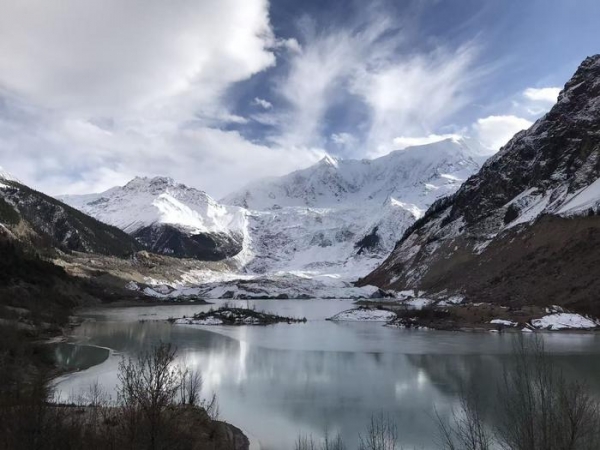
Lake ice in the Midui Glacier, Qinghai-Tibet Plateau (Photo Credit: SHI Kun)