An international team, including researchers at the University of Oxford’s Smith School of Enterprise and the Environment, has revealed striking trade-offs between the different ways eggs are produced, with a wholesale shift to free-range and organic systems potentially raising greenhouse gas emissions and land use even as it aligns more closely with concerns about hen welfare.
An international team, including researchers at the University of Oxford’s Smith School of Enterprise and the Environment, has revealed striking trade-offs between the different ways eggs are produced, with a wholesale shift to free-range and organic systems potentially raising greenhouse gas emissions and land use even as it aligns more closely with concerns about hen welfare.
Using UK data, the study compared several possible scenarios for the egg industry, including shifts to barn, free-range and organic systems, while keeping egg output constant. The authors find that although cage-free systems may align more closely with public concern for hen welfare, they may also require larger hen populations and could increase environmental pressures. Switching entirely from a business-as-usual mix to free-range and organic production, for example, would raise emissions by 60% while almost doubling the amount of land used.
Dr Harriet Bartlett, Senior Research Associate in Sustainable Food Solutions at the Smith School of Enterprise and the Environment, University of Oxford, said: 'Our research highlights the importance of considering animal welfare, environmental impact and food production together when shaping the future of egg farming. Being aware of these tricky trade-offs will help us make better decisions for the environment and animal welfare in the future.'
Read More: University of Oxford
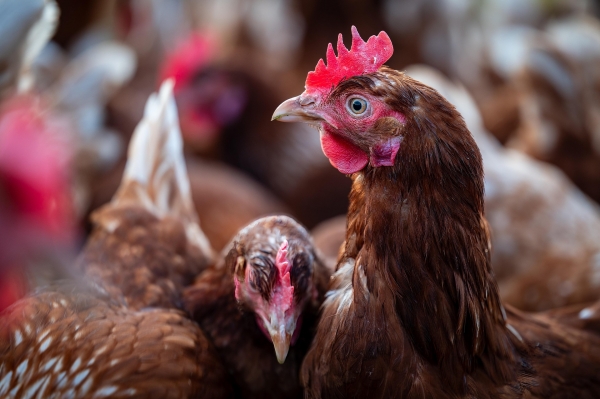
Photo Credit: BernhardJaeck via Pixabay