

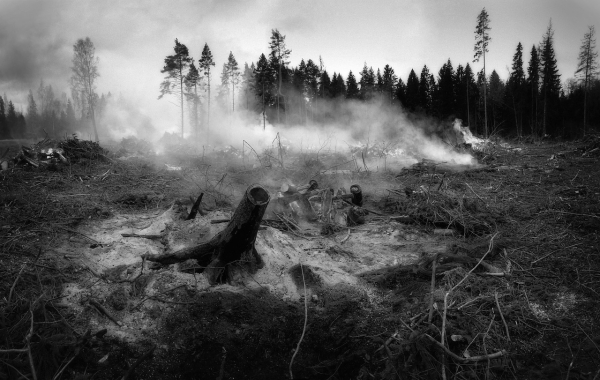
The severe, drought-fueled fires now burning across much of the American West and Canada may be scorching forests so thoroughly that they cannot recover to the forests they once were, new research shows.
The severe, drought-fueled fires now burning across much of the American West and Canada may be scorching forests so thoroughly that they cannot recover to the forests they once were, new research shows.
A study by Colorado State University, Western Colorado University and others has found that the fastest-moving forest fires not only burn more area, but burn it more severely, leaving fewer surviving trees to reseed the landscape and opening the door to different species and vegetation types.
The study, published today in Science Advances, examined nearly 3,500 wildfires that burned in conifer forests across western North America between 2012 and 2023. The findings suggest that as conditions become more favorable for fast fire growth, forests may be increasingly pushed toward long-term ecological change rather than recovery.
“People often focus on the size of a wildfire because that’s what makes headlines,” said lead author and Western professor Jonathan Coop. “But how fires burn is as important as how much they burn. In forests, fire speed not only increases acres burned but also leads to outsized impacts to each of those acres.”
Read More: Colorado State University
Photo Credit: ojkumena via Pixabay


