

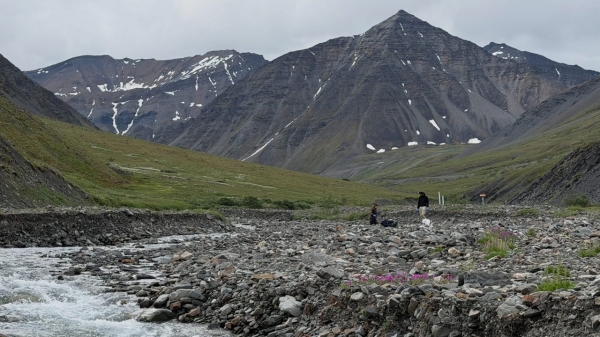
A University of New Mexico research team spent several weeks in northern Alaska this summer studying how permafrost thaw may be changing water quality and the movement of carbon through Arctic watersheds.
A University of New Mexico research team spent several weeks in northern Alaska this summer studying how permafrost thaw may be changing water quality and the movement of carbon through Arctic watersheds.
Led by Assistant Professor Marisa Repasch, the July field campaign focused on the Kuparuk, Atigun and Sagavanirktok River watersheds on the North Slope of Alaska, about 33 degrees north of Albuquerque. The team collected soil, soil pore water and river and stream water samples to better understand how thawing permafrost affects groundwater chemistry and the broader Arctic ecosystem.
The research is part of a growing program at UNM focused on understanding how Earth surface processes, including erosion and weathering, influence the global carbon cycle.
“The main goal of our recent field campaign in Alaska was to investigate how permafrost thaw may be impacting surface and groundwater quality in Arctic watersheds,” Repasch said.
Read More: University of New Mexico
Image: Researchers setting up for water sampling in the Atigun River headwaters via University of New Mexico.


