

Between 2021 and 2023, Antarctica appeared to be growing.
Between 2021 and 2023, Antarctica appeared to be growing. Heavy snowfall fueled by wetter weather caused parts of the continent to gain mass, leading some to question whether climate change is really causing the ice to melt. However, a new study shows that the precipitation increase was an anomaly related to extra warm tropical ocean temperatures, not part of a long term trend.
Antarctica has been “shrinking” for decades as warm water melts ice from below and sends large chunks crashing into the ocean. Annual precipitation can’t keep up with the rate of melt, causing a net mass loss. However, the snow that fell on East Antarctica, a vast area that contains nearly 80% of Earth’s land bound ice, added mass faster than the ice was melting. Although mass loss continued in West Antarctica, the general trend seemed encouraging.
“In the early 2020s, there was an exceptional amount of snowfall over parts of Antarctica. Because Antarctica is so big, it doesn’t take that much extra snow thickness to counter the loss of ice from the edges of the ice sheet, which led to the perception that the loss of ice is slowing down,” said co-author Eric Steig, a UW professor of Earth and space sciences.
Read More: University of Washington
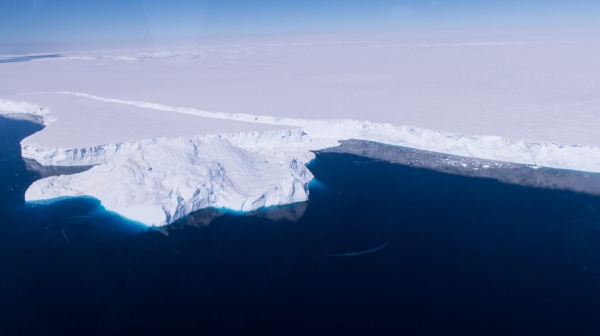
Aerial view of the Totten Ice Shelf during the 61st Japanese Antarctic Research Expedition in late 2019. Totten contributes to ice loss in East Antarctica, but this was offset by the increased snowfall from 2021 to 2023. (Photo Credit: Yoshihiro Nakayama)


